Poltava Regional Administration Square
Project Year(s)
2018
Location
Ukraine, Poltava
Size
3 ha (7.4 acres)
Client / Owner
Poltava Regional State Administration
Support
Concept Design · Schematic Design · Design Development · Construction Documents
Partners & Collaborators
'City.Lab'
Status
Construction Documents
Challenge
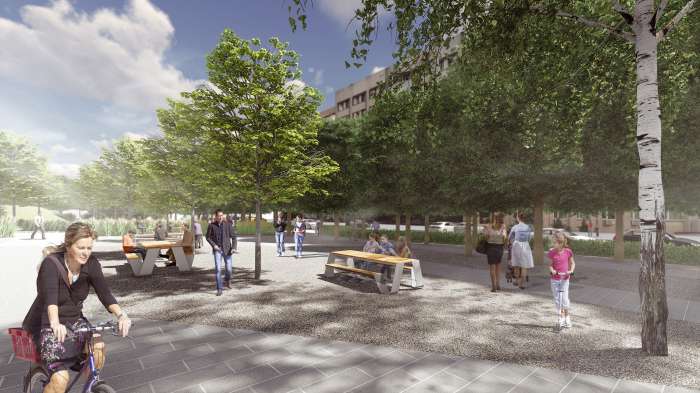
To create an active public space based on the design by the City.Lab studio: introduce activities for multiple scenarios, shift the character of the square from ceremonial and monumental to welcoming, and bring together a place for mass gatherings with a memorial honoring those who died during the Revolution of Dignity.
Solution
Based on sociological research and site analysis, we defined distinct zones within the Maidan Territory: a main square with a dry fountain, a large lawn, a park, dining areas, a playground and parking. All of them are linked by a timeline memorial — a cobblestone path with bas-reliefs marking seven key events of the Revolution of Dignity.
The “Maidan Territory” Competition
In 2016, an open all-Ukrainian architecture and art competition, “Maidan Territory,” was announced for the best design of a public space on the square in front of the Poltava Regional State Administration. Entries were accepted from May 5 to September 5, and 10 eligible proposals were submitted. They were first reviewed by an expert council and a council of public experts. On September 23, the projects were presented, an exhibition opened, and online voting began on the website of the regional culture department; residents could also vote by letter in a sealed ballot box. In November 2016, the Poltava studio City.Lab was announced as the winner.
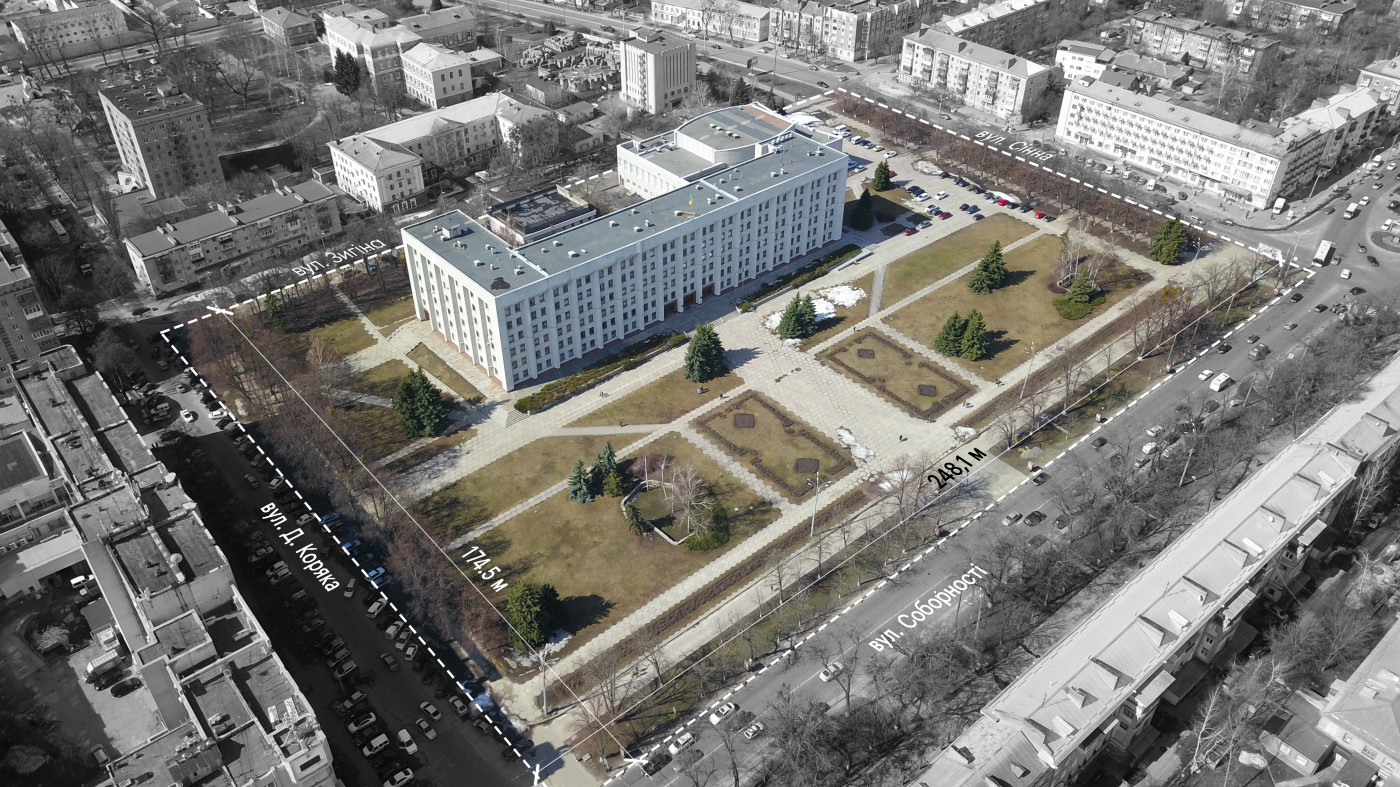
The vast square was out of scale with people
Winning Design by City.Lab
For the winners, the worthiest tribute to the Revolution of Dignity and the memory of the Heavenly Hundred is to put into practice the values voiced on the Maidan: dignity, equality, freedom and real change. City.Lab set out to express these principles in a new kind of environment — a comfortable public space that draws people in and can host mass gatherings, combined with a memorial that quietly recalls events of great importance for the country and honors those who died in them.
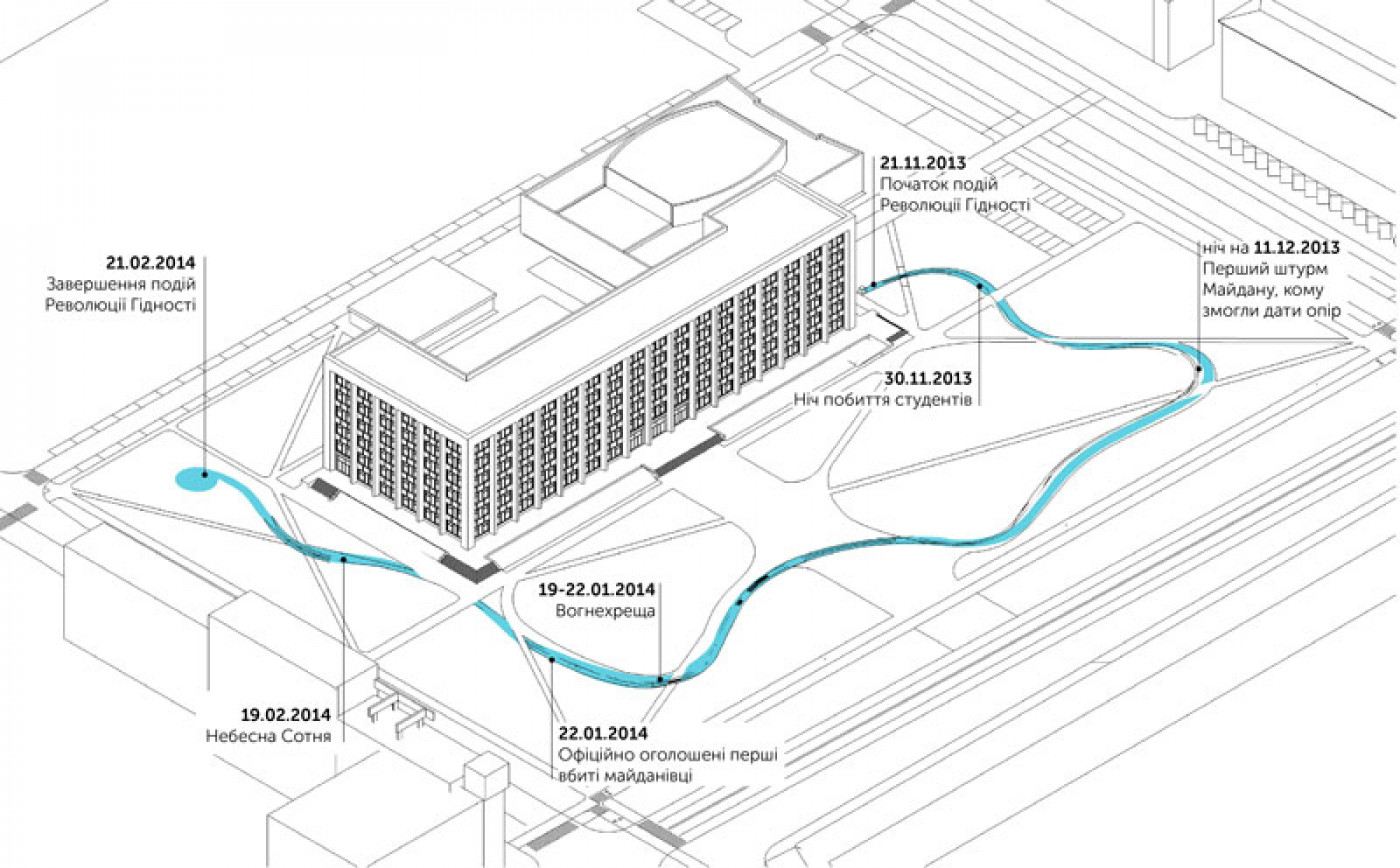
The proposed memorial has several advantages over a conventional monument. It provides places for flowers and candles on specific dates, and allows individual dates in the sequence of events to be commemorated, rather than only its beginning and end. Because of the memorial’s length, the act of remembrance itself can develop its own traditions, such as a small procession.
Public Hearings
Public hearings on the project took place on December 14, 2016 as a round table with jury members and activists. Participants concluded that the artificial stream needed rethinking because of its high cost and complexity, but overall the public supported the authors’ idea. It was decided to bring in landscape architects and a sculptor to develop the design further.
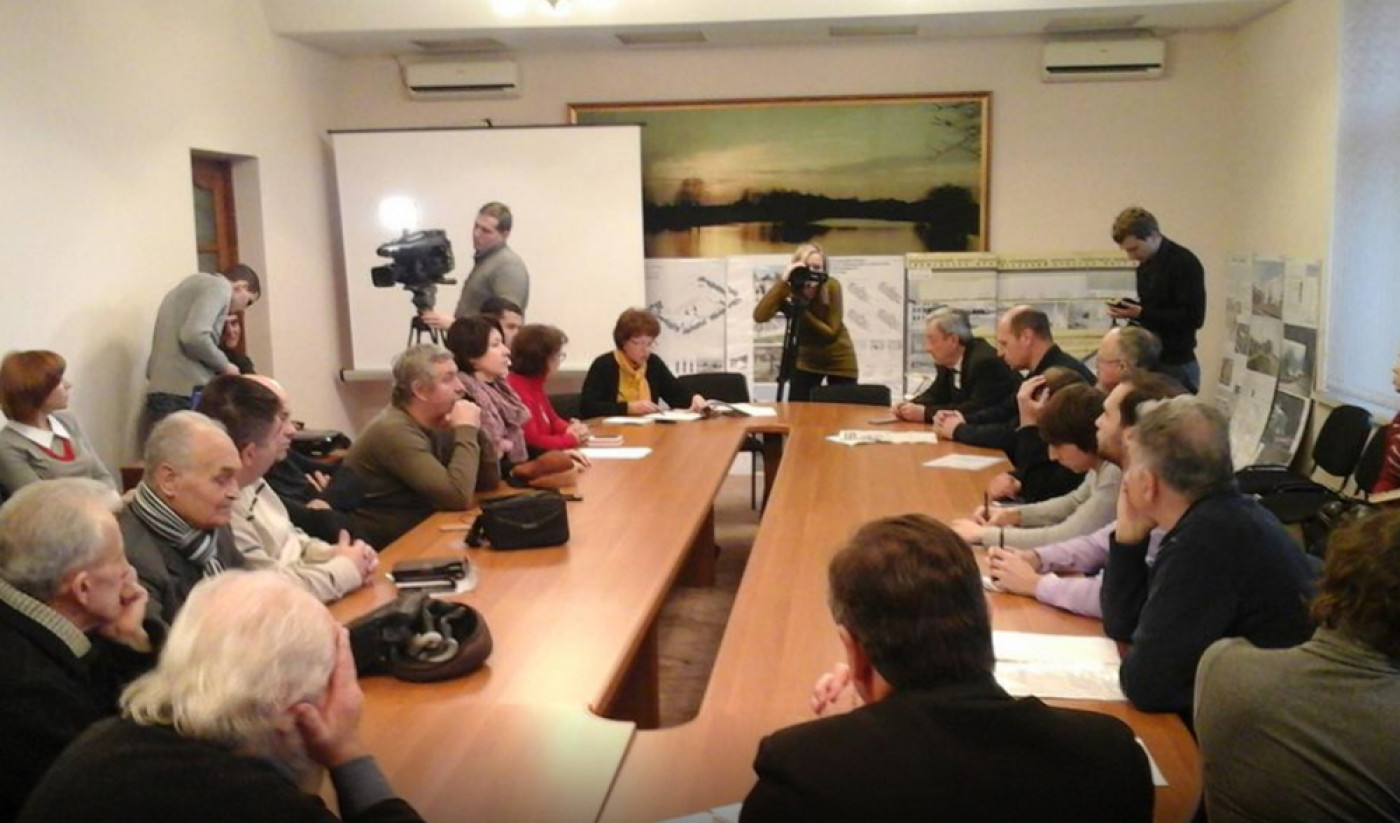
Public discussions
Administrative Services Center by Dekart Studio
In January 2017, plans emerged for an administrative services center designed by Dekart Studio. The new building, located directly on the grounds of the Regional State Administration, was to bring together the city and regional service centers, with opening planned for the end of 2018. This project significantly shaped the next steps in rethinking the memorial complex.
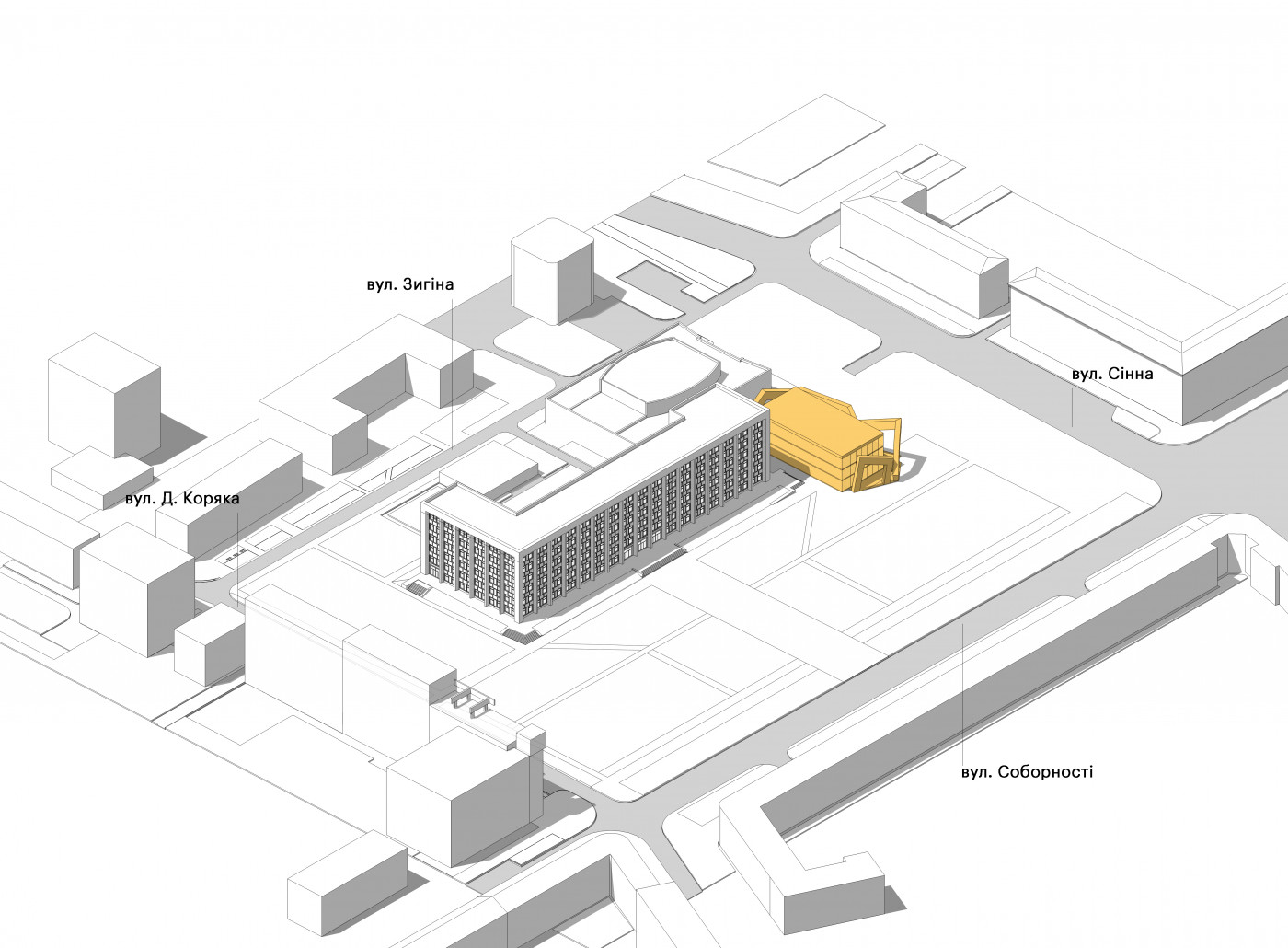
Location of the administrative services center on the site
KOTSIUBA Joins the Project
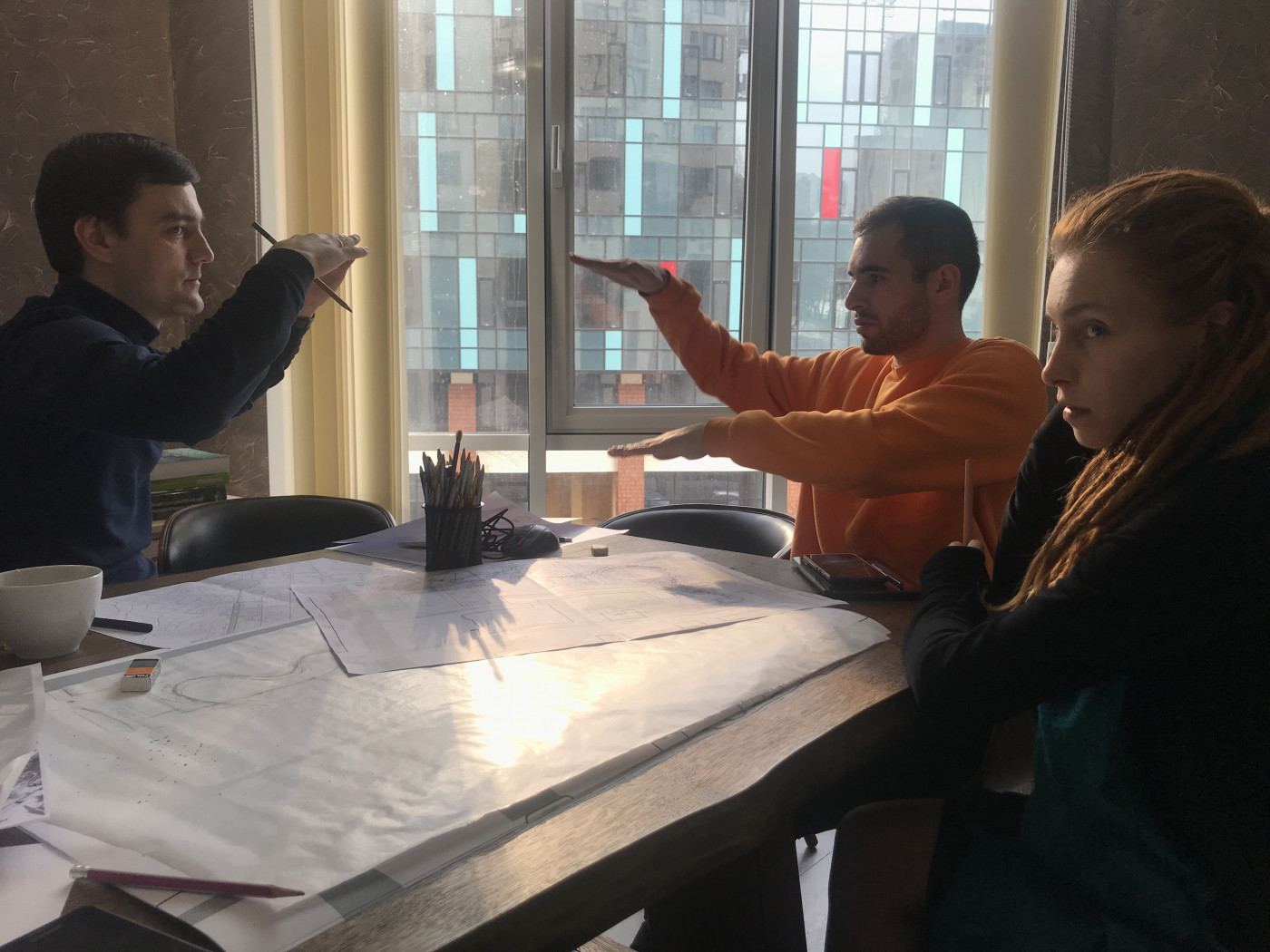
In February 2018, City.Lab invited us to collaborate. Before starting, we met the authors of the project and studied the site.
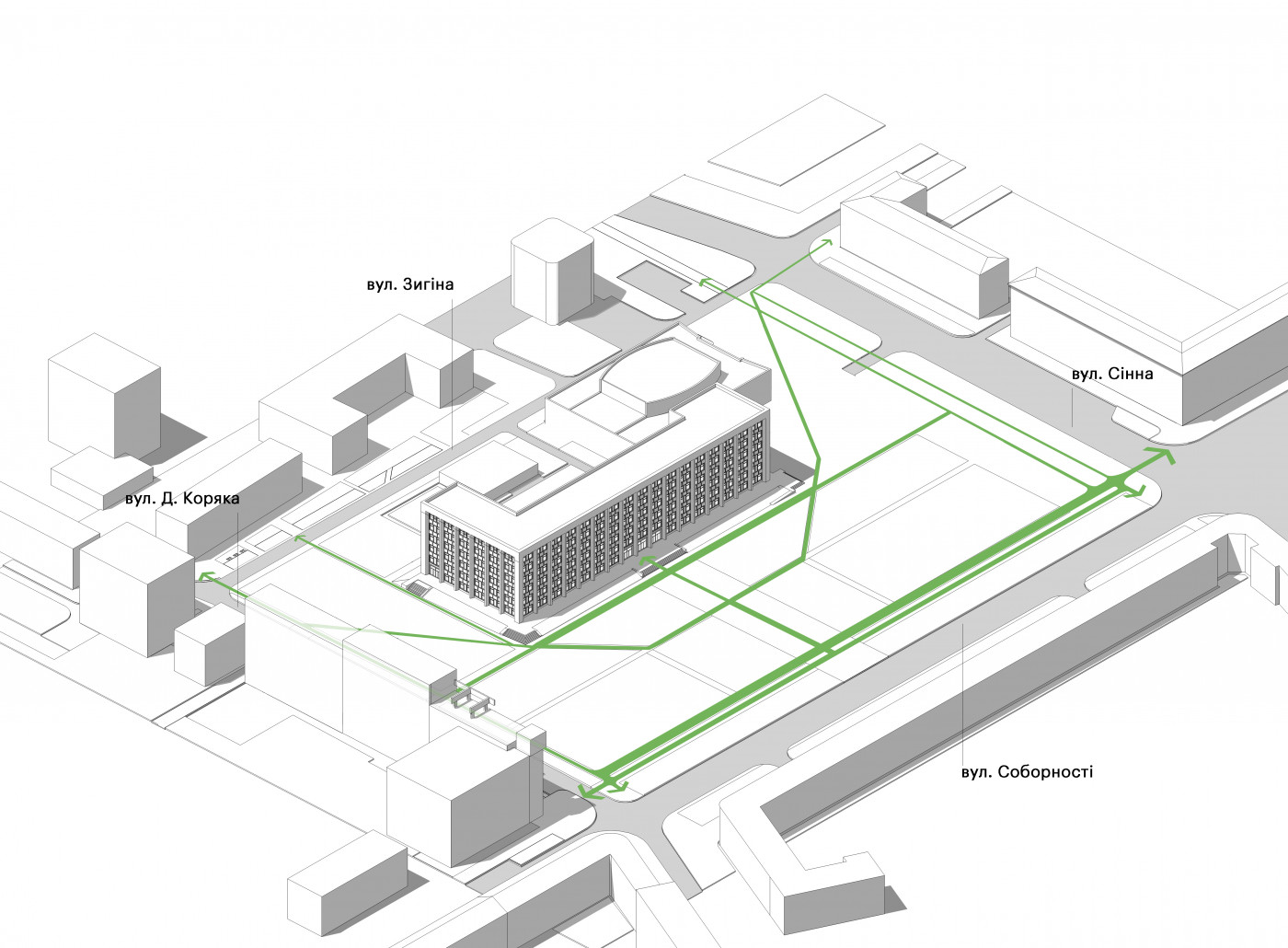
Existing Pedestrian Flows
The main pedestrian routes ran along the city’s central axis, Sobornosti Street, and were mostly transit. There was also significant foot traffic along Dmytra Koriaka Street, with a grocery store and a business center, where people needed places to rest, meet and talk. Volodymyra Kiselova Street (formerly Zyhina Street) had long been closed to pedestrians, forcing people to walk around the very long facade of the administration building and cross the chaotically parked square in front of the conference hall. Organized parking and reopening the street to residents were therefore needed.
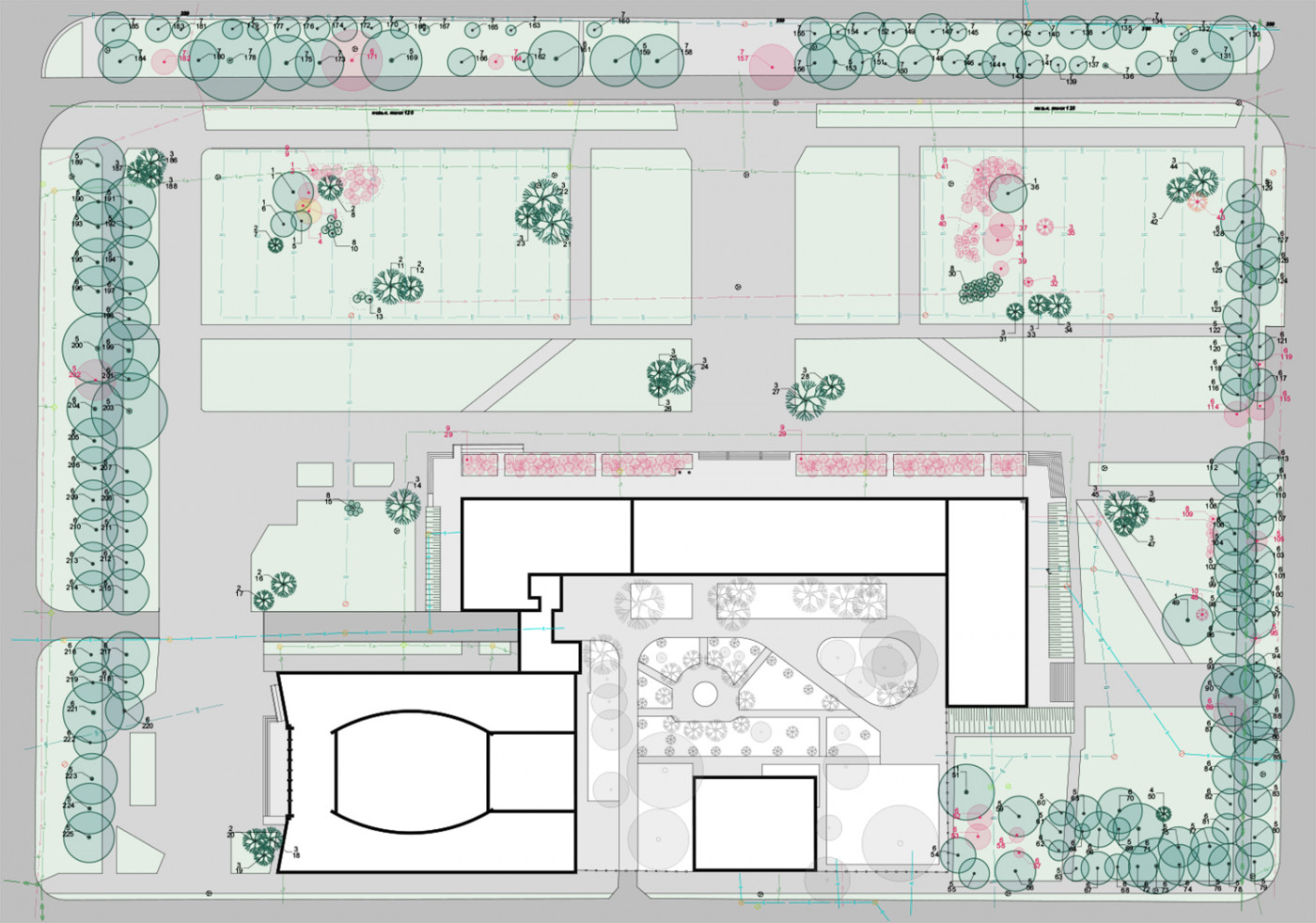
Tree Survey
In April 2018, together with phytopathologist Sergiy Rohovskyi, we surveyed the existing trees on site. There were 216 trees in total: horse chestnut and large- and small-leaved lime dominated, along with silver birch, white willow, blue spruce and Serbian spruce. Most trees were in satisfactory condition but needed pruning to remove mistletoe or dead tops; 25 were to be removed due to mistletoe infestation or broken crowns. The clumps of bridal wreath spiraea and masses of savin juniper were also to be removed.
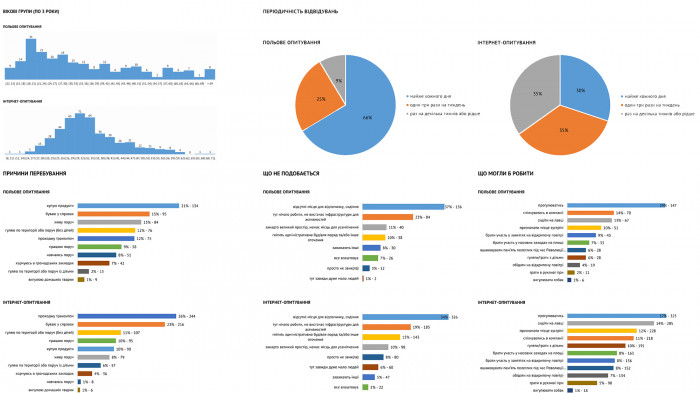
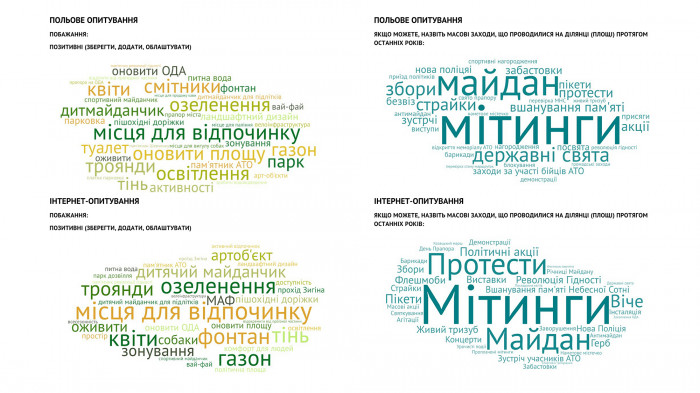
Sociological Research
The research was carried out in March 2018 by City.Lab with the help of volunteers. The street survey of Poltava residents covered almost all age groups. More than half visited the site daily, others two or three times a week or less. They came on business, lived nearby, walked, passed through, worked, studied or walked with children. Most respondents noted a lack of places to rest, no infrastructure for activities and a square that felt too vast. The online survey reached mainly people aged 20 to 40, with broadly similar responses. In developing the design, we took the needs of all these groups into account. The planned administrative services center created new patterns of visitor movement and significantly influenced the architectural and landscape decisions.
Functional Zoning
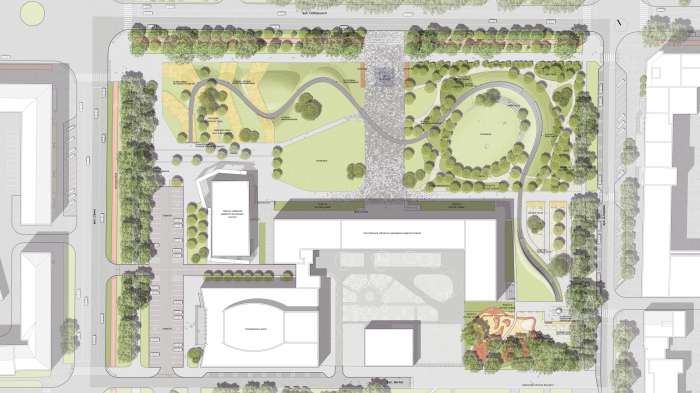
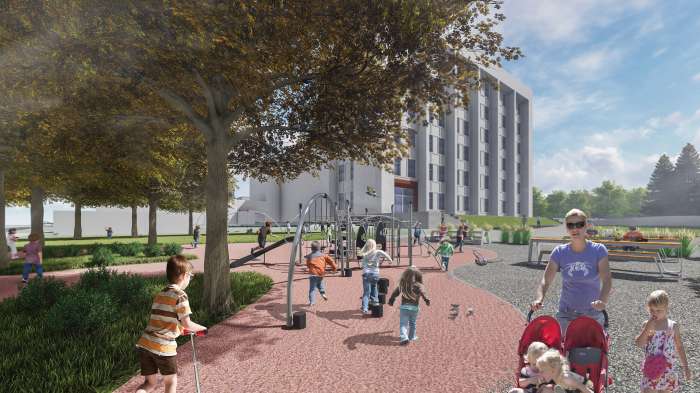
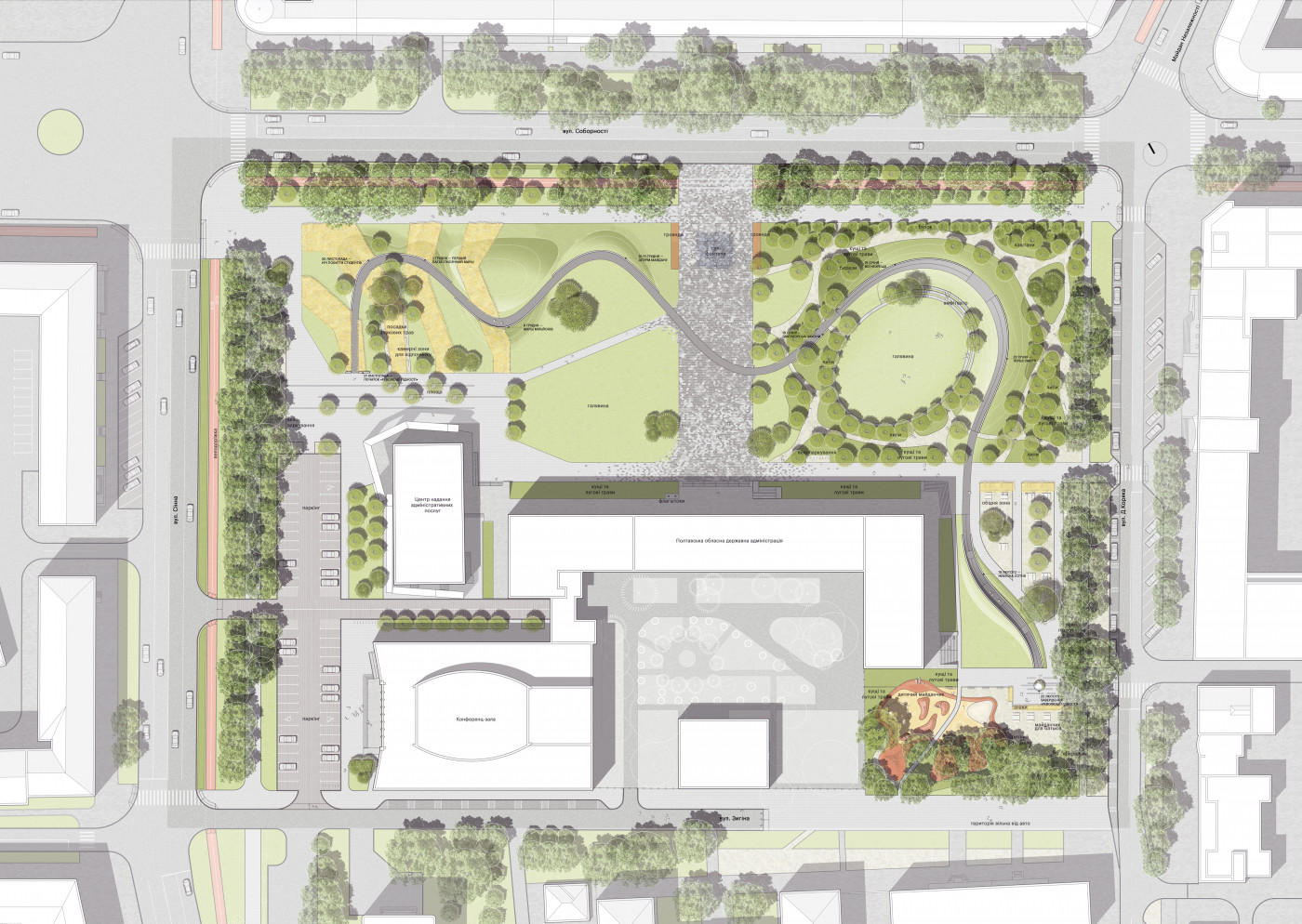
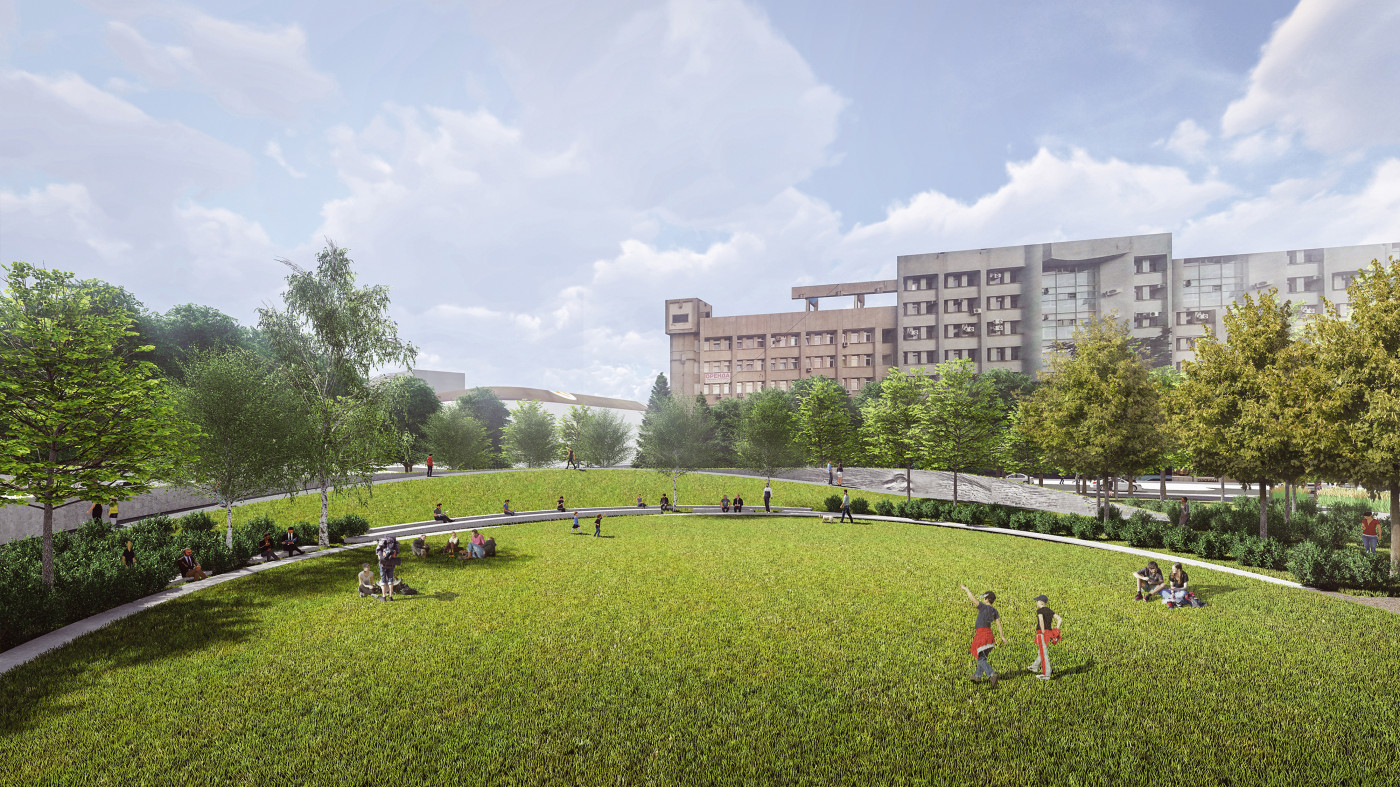
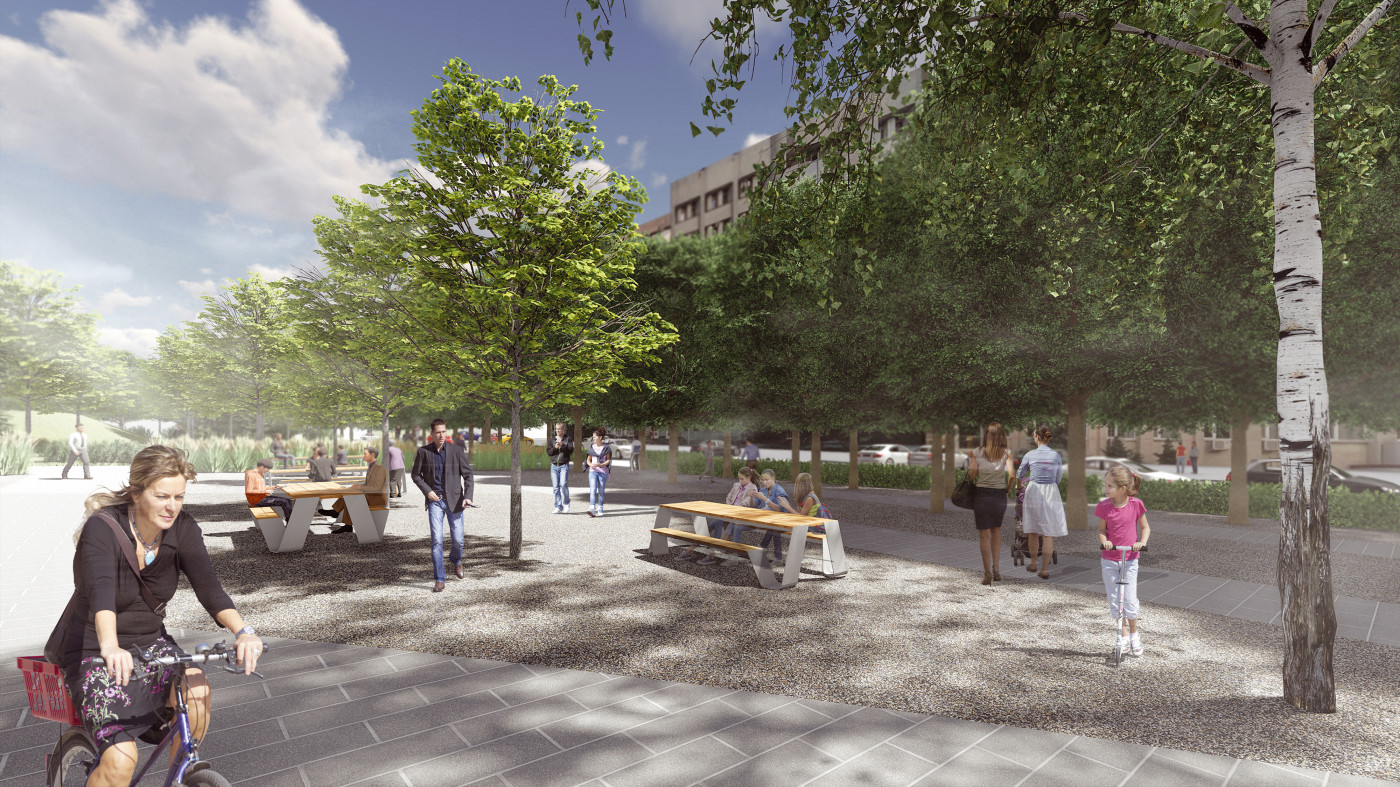
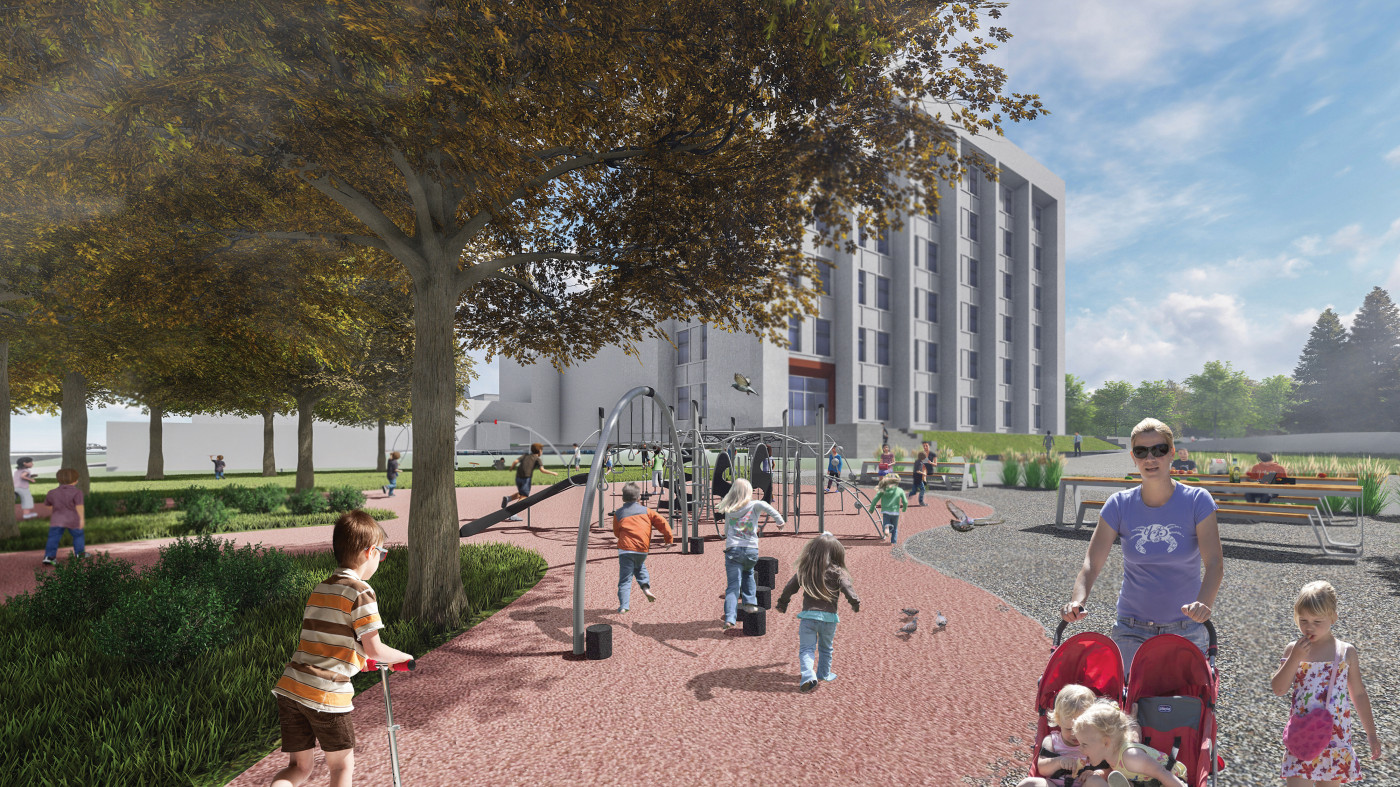
Based on these findings, we developed the functional zoning of the site. The park, with an amphitheater, a lawn and walking paths, is a place for active games and lounging on the grass. In front of the administration building, a square is kept for gatherings. A dining area gives office workers and grocery shoppers convenient tables and benches. In the quieter area behind the building are a playground and a seating area for parents. The long-closed section of Volodymyra Kiselova Street becomes pedestrian and takes over the role of the transit route from the square. Organized bicycle and car parking is provided next to the conference hall.
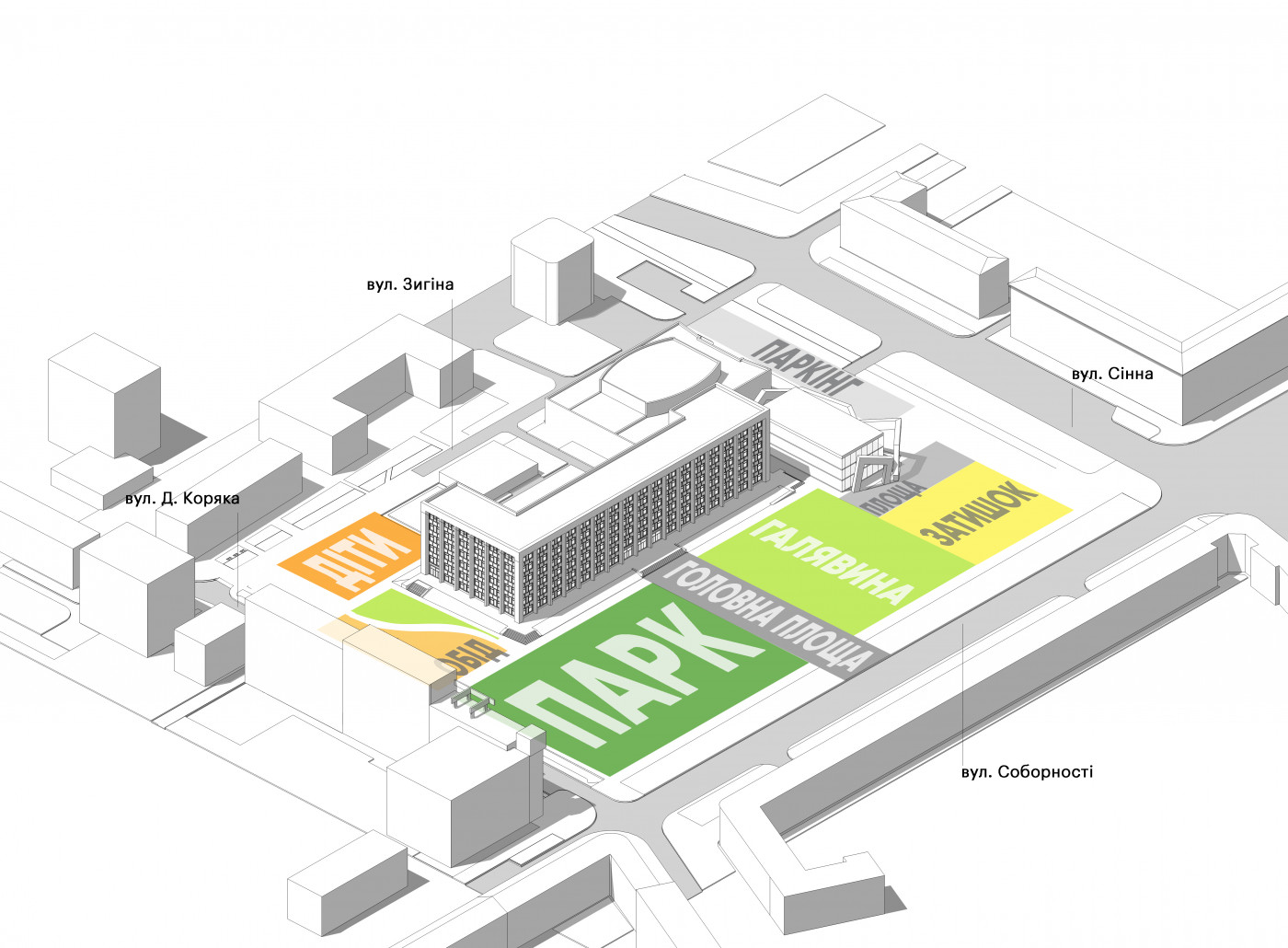
Design Exploration
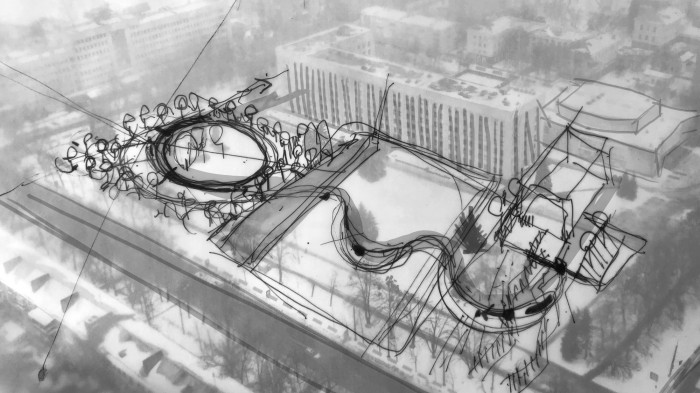
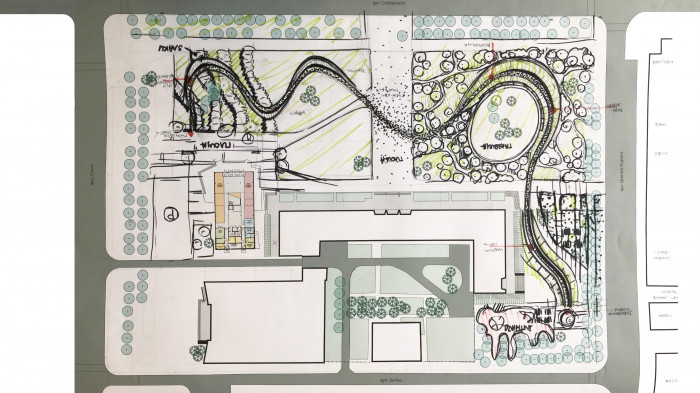
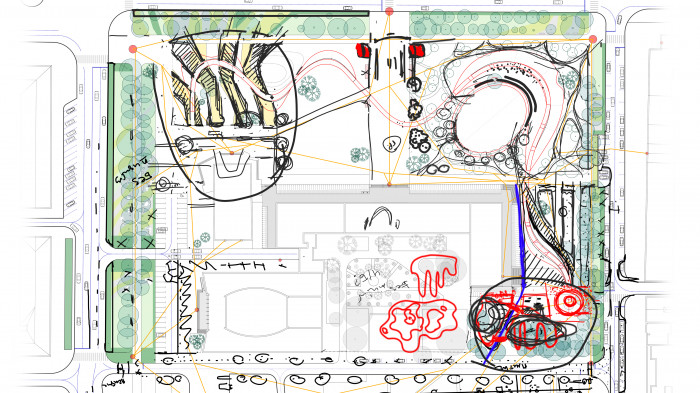
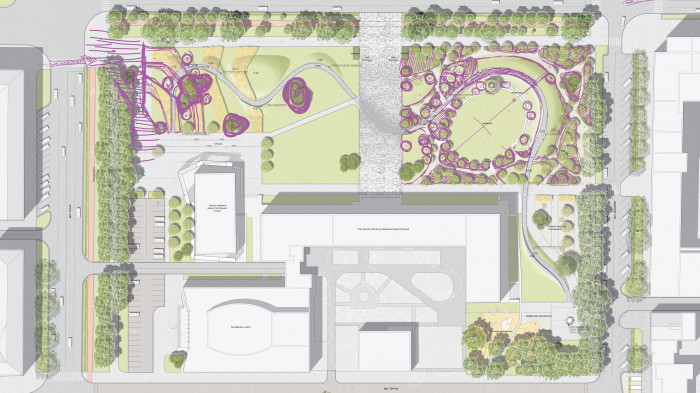
Master Plan
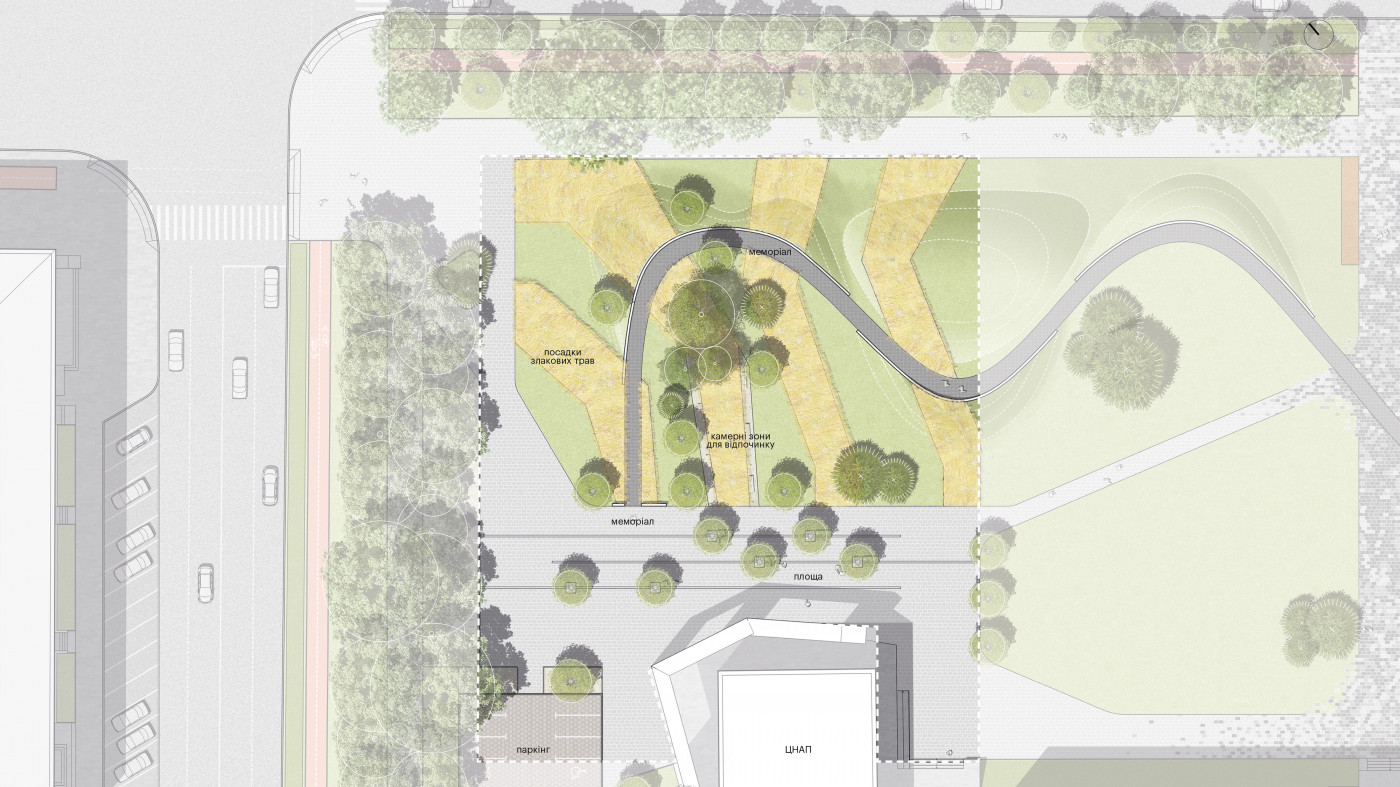
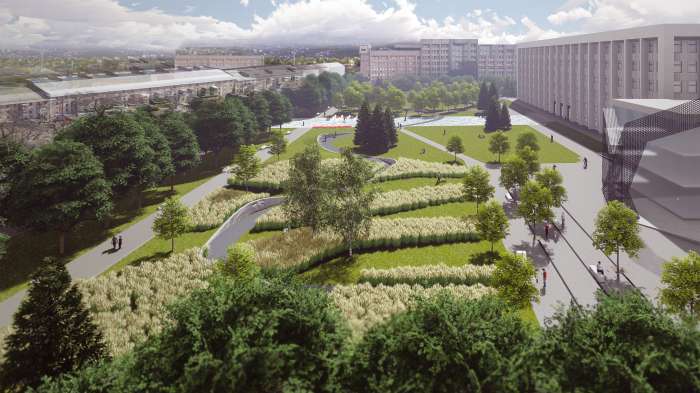
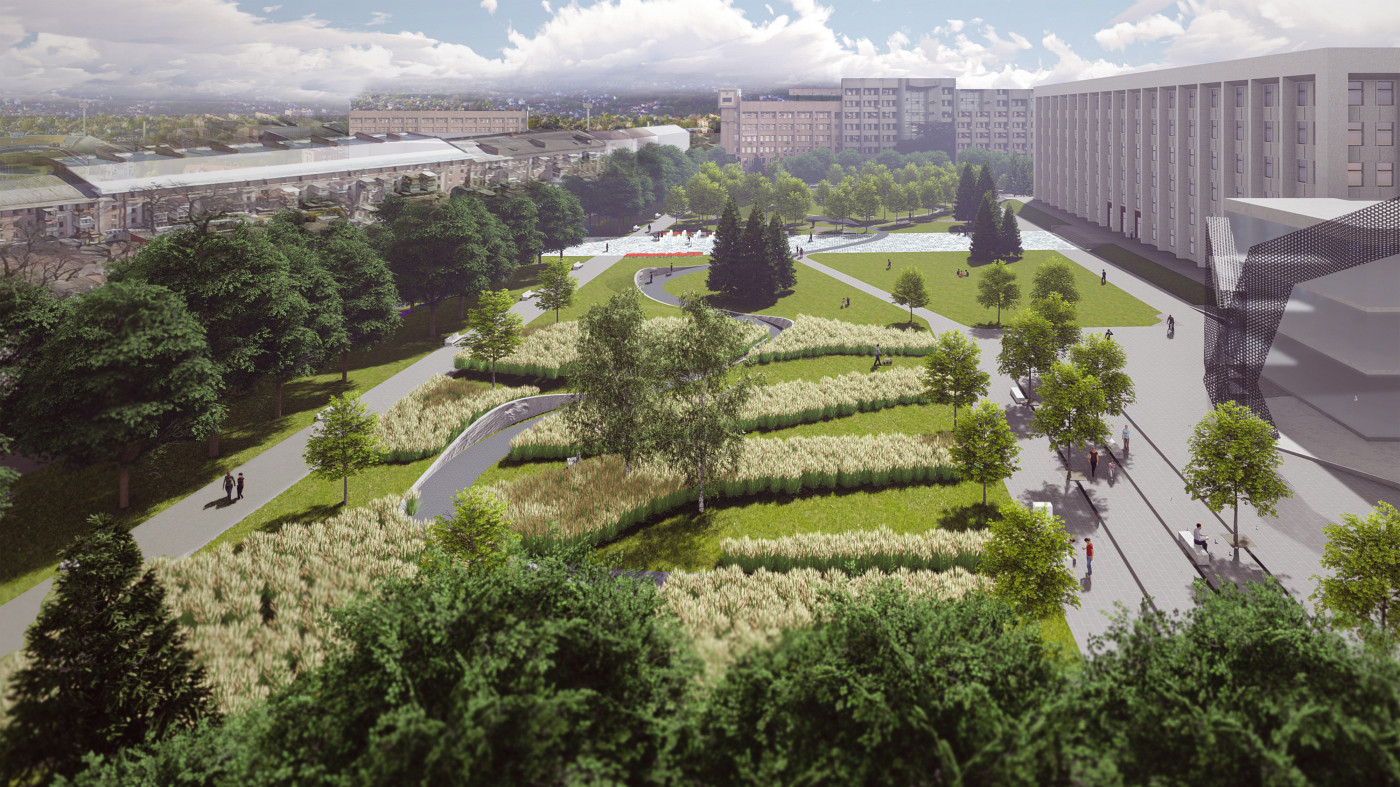
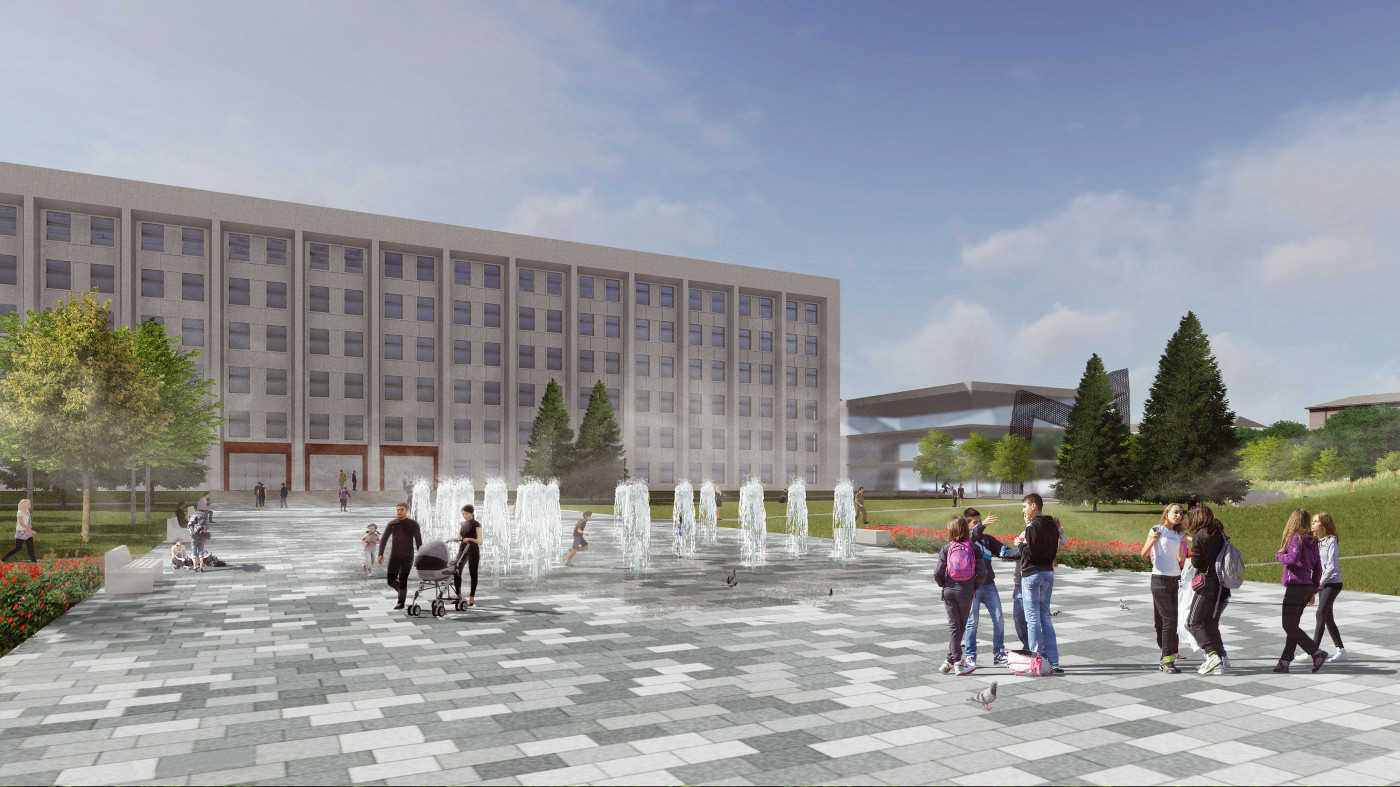
The square in front of the administrative services center: a contemporary space bordered by quiet seating areas among ornamental grasses
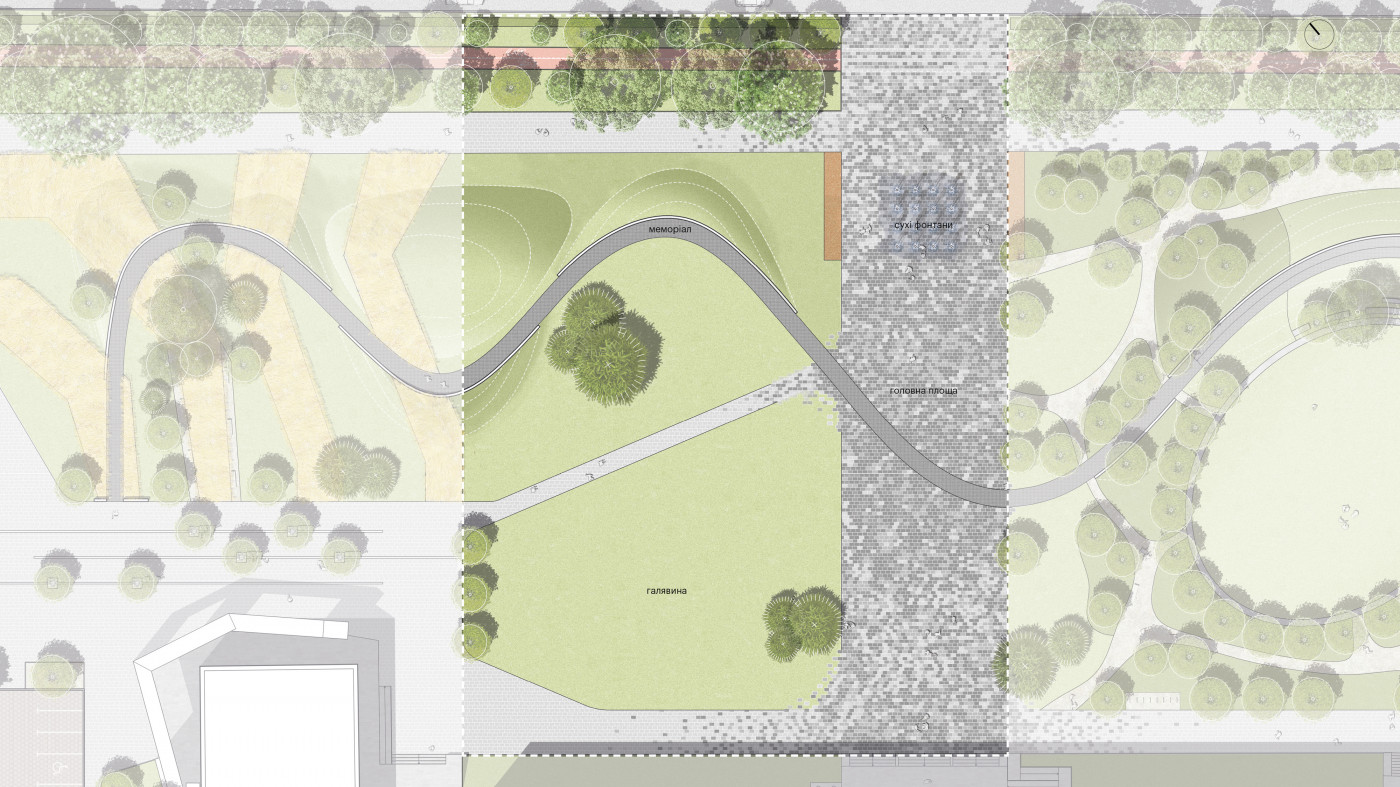
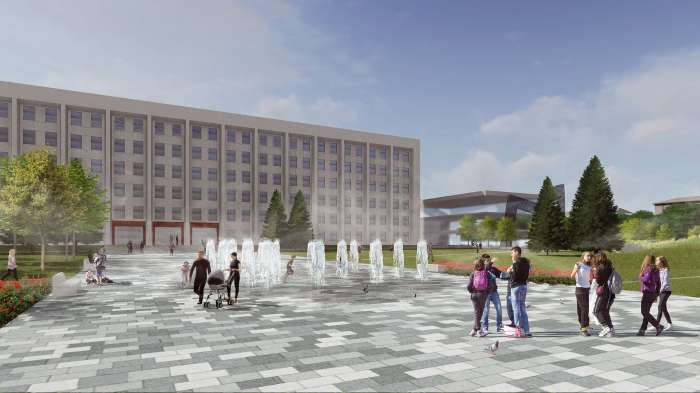
Main square and lawn for active recreation
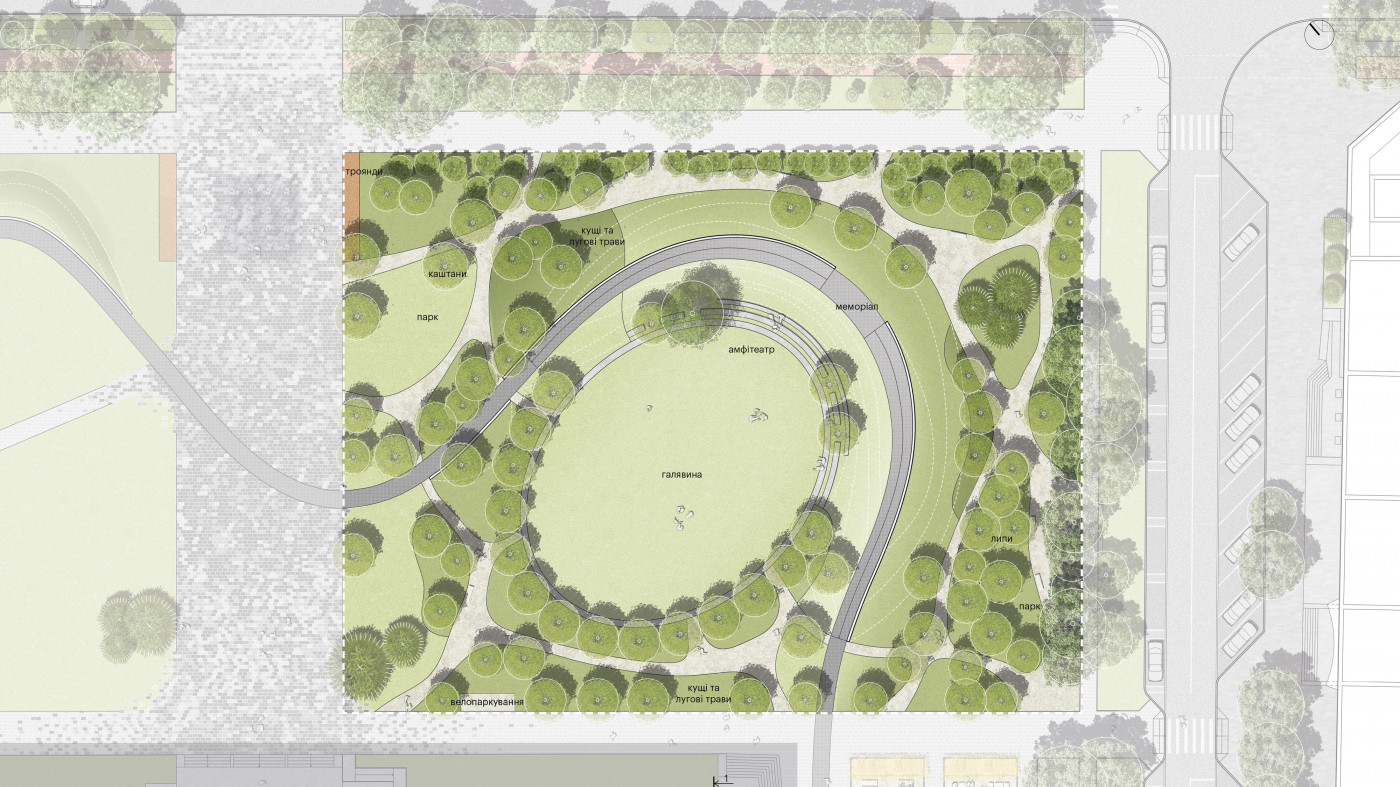
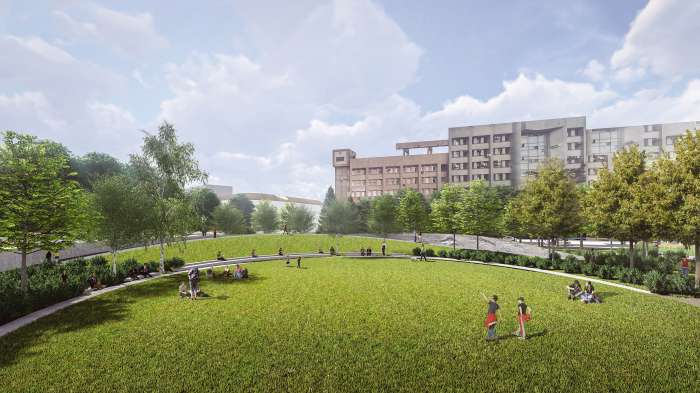
Park with an amphitheater and walking paths
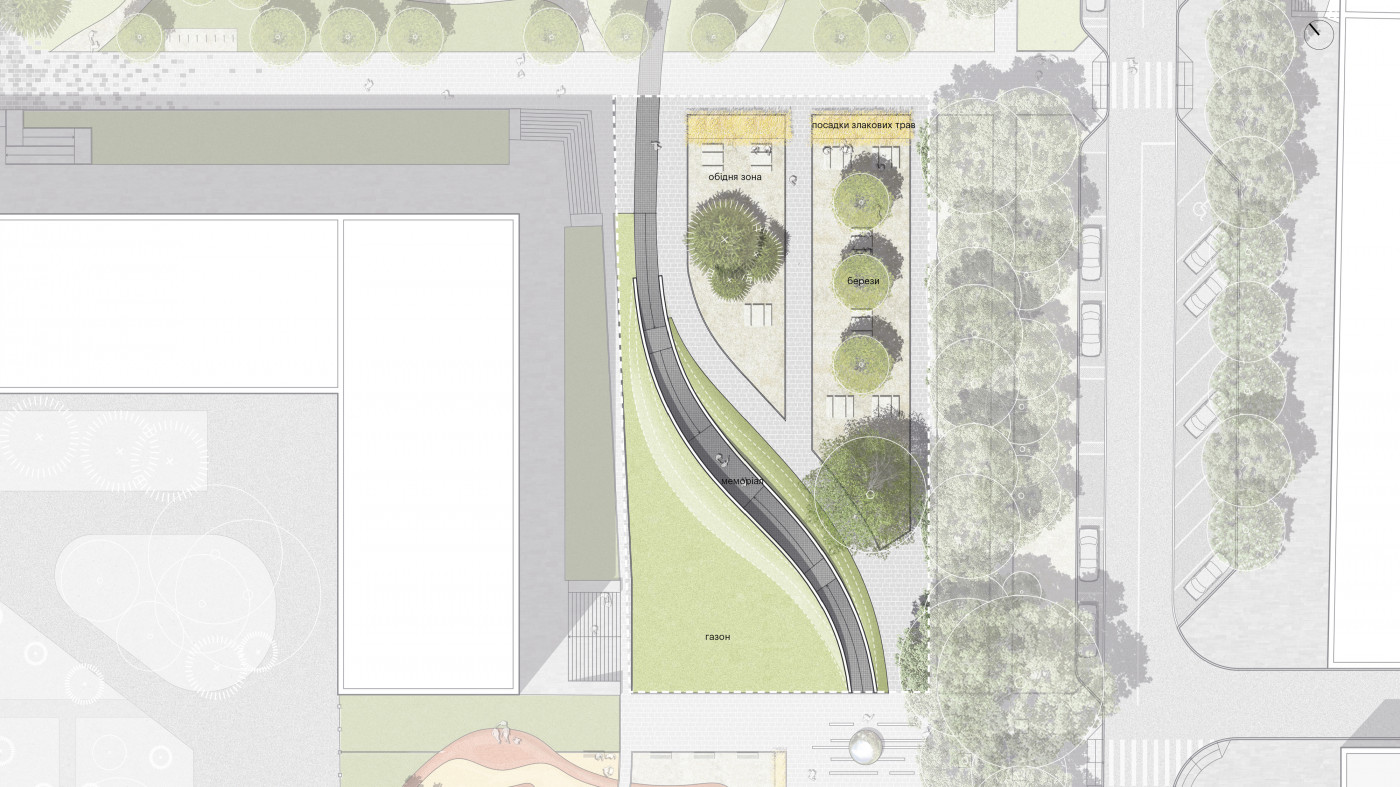
Dining area for nearby office workers and grocery shoppers
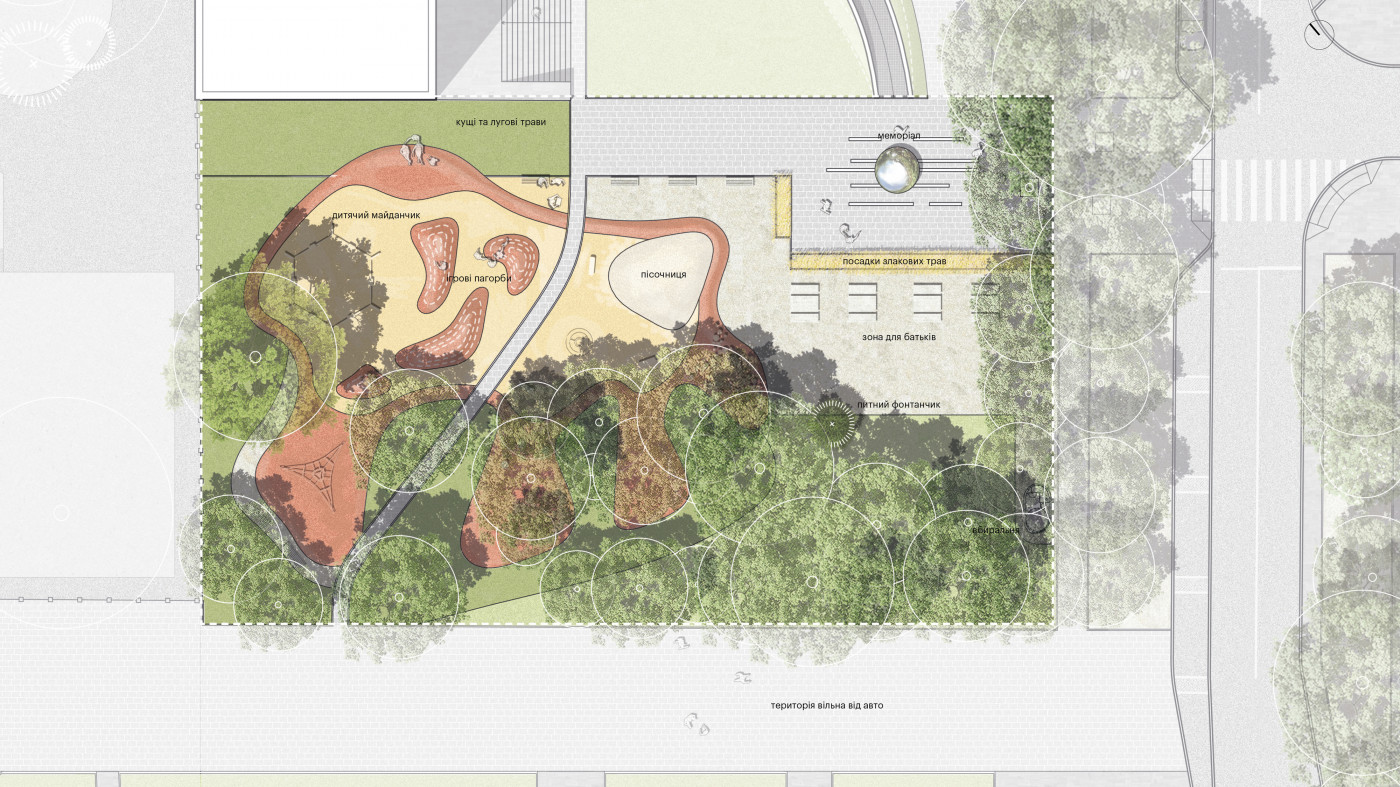
Playground in a quiet area away from the roads
Revolution of Dignity Memorial
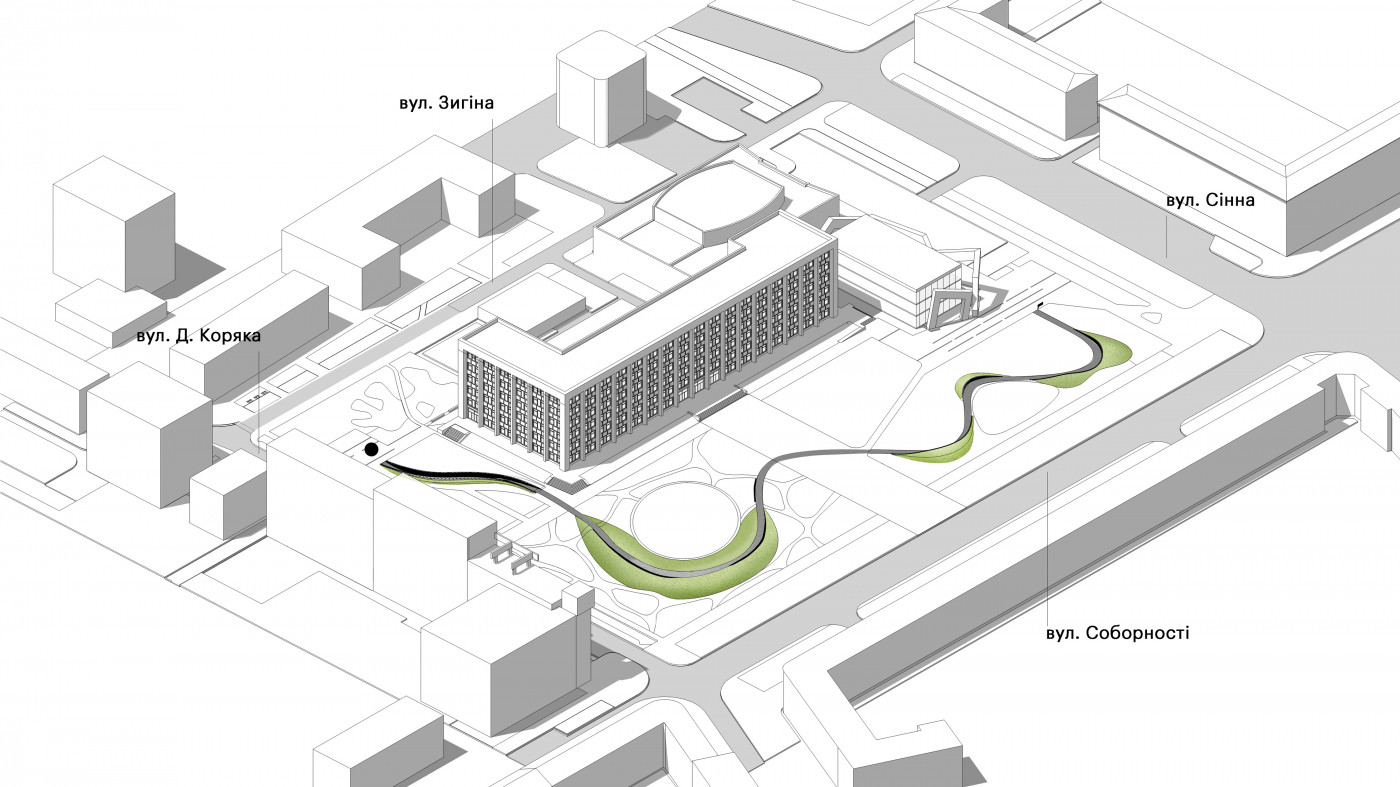
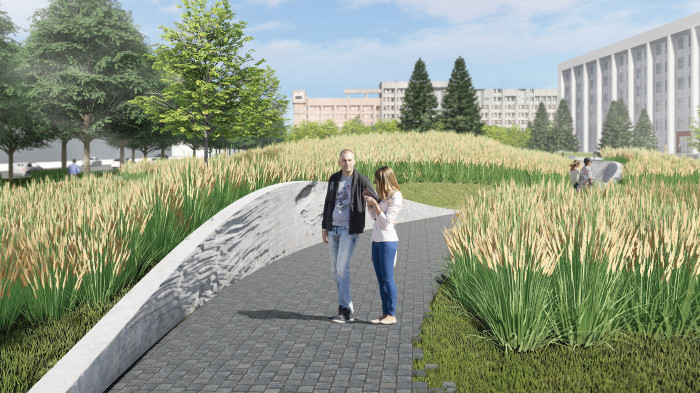
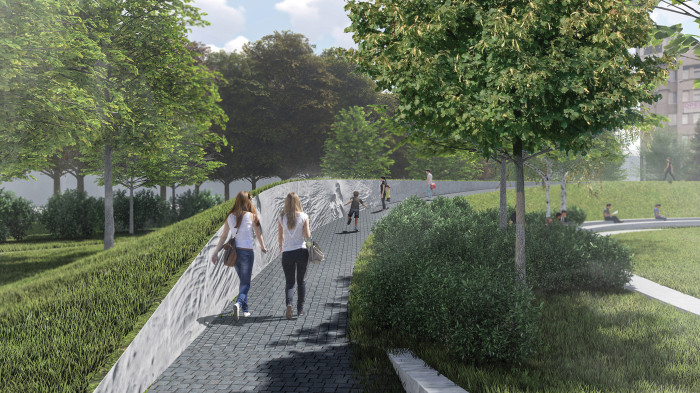
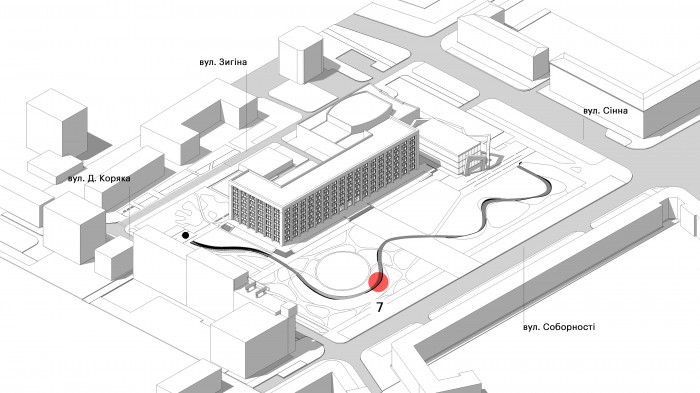
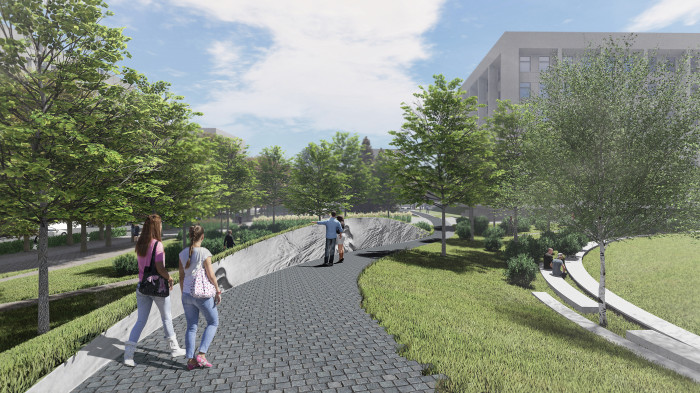
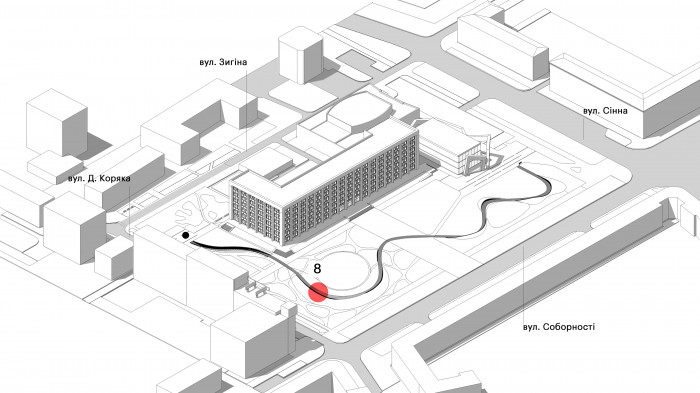
The functional zones are linked by a timeline memorial laid flat in the ground. Seven key events of the Revolution of Dignity are captured in bas-reliefs by Nazar Bilyk. They are connected by a path of sawn cobblestones and by terrain that rises and falls, heightening the emotional experience. At the end of the memorial stands a mirrored sphere that invites a sense of personal involvement in shaping the future, while the laughter of children from the nearby playground is a reminder that life goes on.
Key points of the memorial
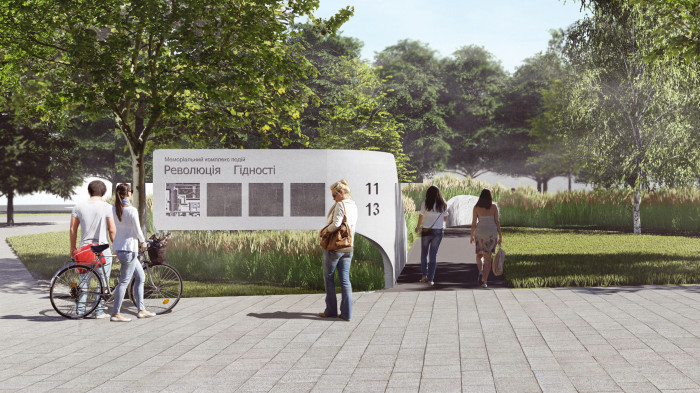
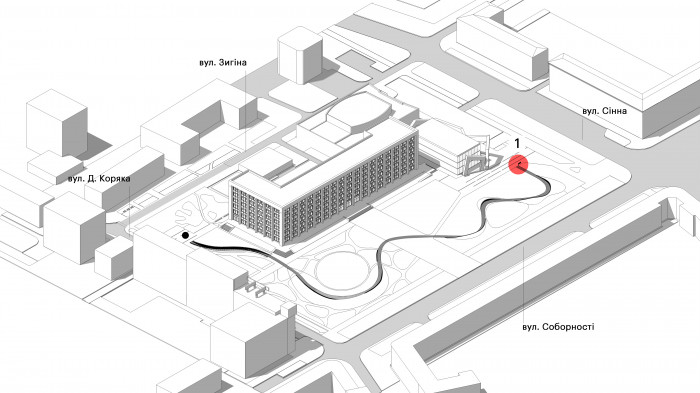
The starting point of the Maidan. President Viktor Yanukovych returns to Ukraine without signing the European integration agreement. People take to the streets in protest and adopt a resolution: the president must go, along with the government and parliament.
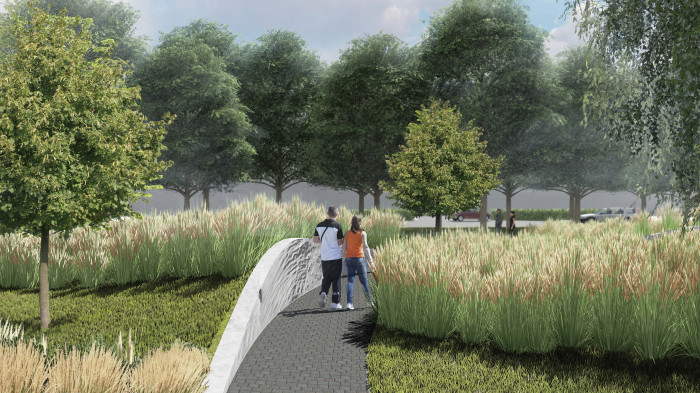
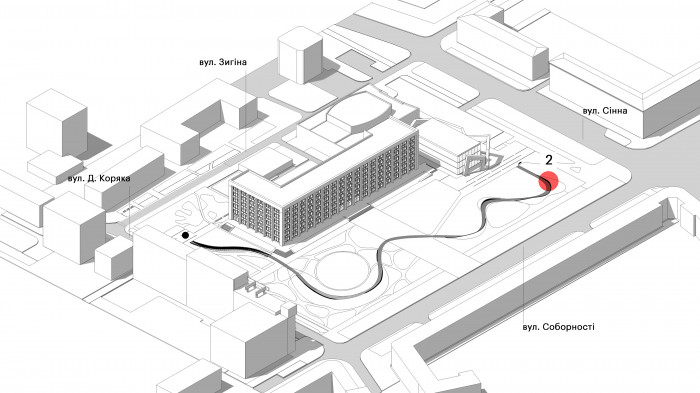
The turning point of the Maidan. A period of standoff between the Maidan and the authorities begins. Yanukovych’s team uses every means — abducting activists, beating student protesters. Outraged by the brutal violence, most people take to the square.
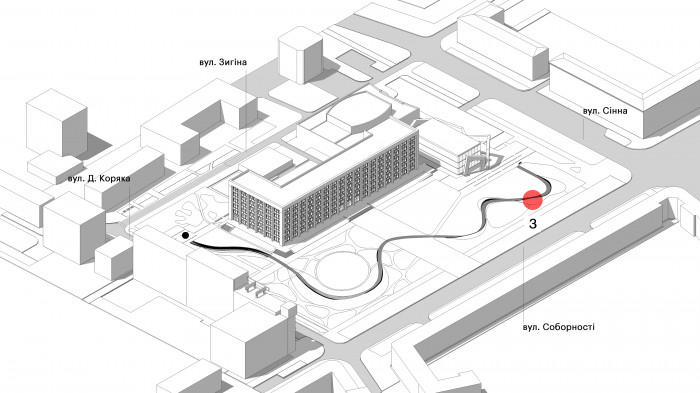
The first mass rally (viche) turns into an assault on the Presidential Administration. The Berkut riot police advance. The first violent response from protesters. Protesters are persecuted.
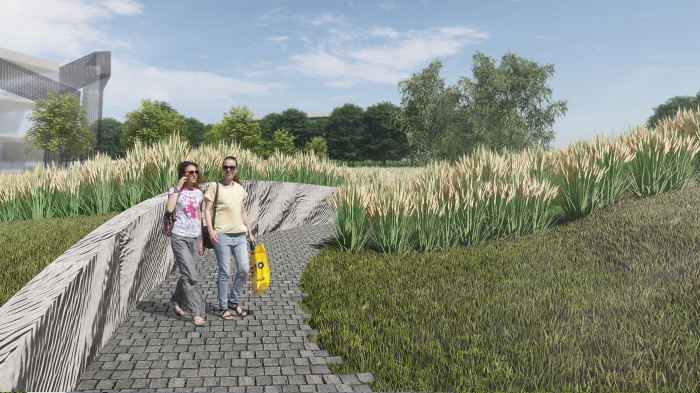
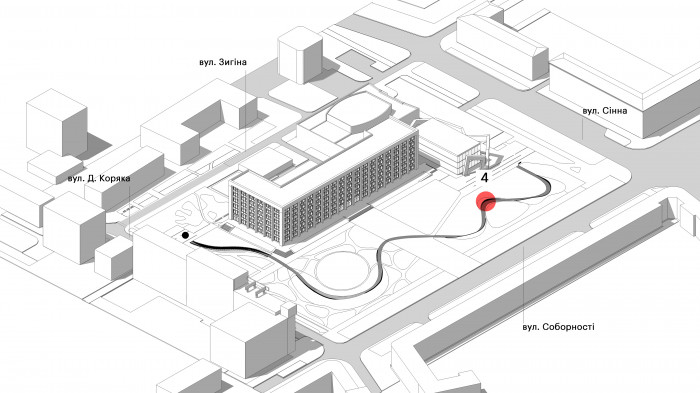
The largest rally (viche) in the history of the Maidan.
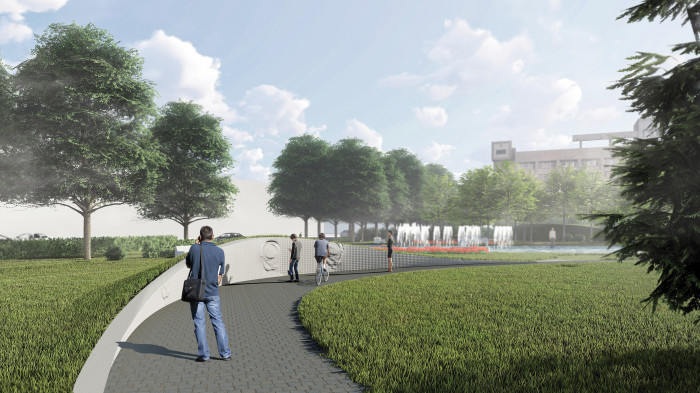
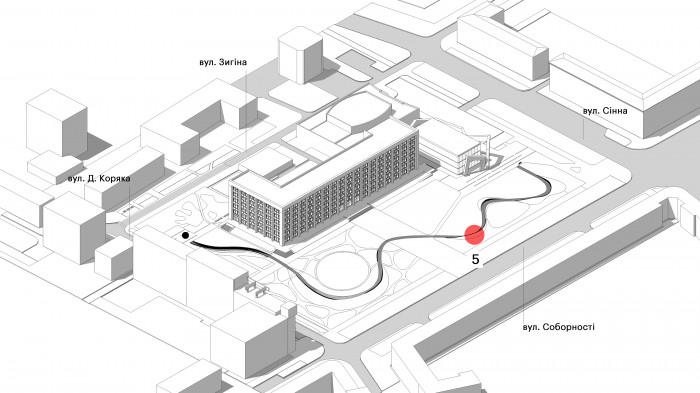
An attempt to clear the Maidan. The bell of St. Michael’s Cathedral, ringing for more than three hours for the first time since 1240, becomes a psychological and emotional turning point: people withstand the siege. The Maidan grows new barricades.
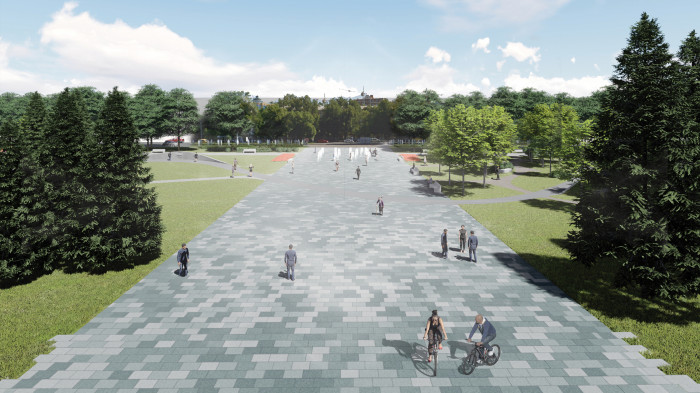
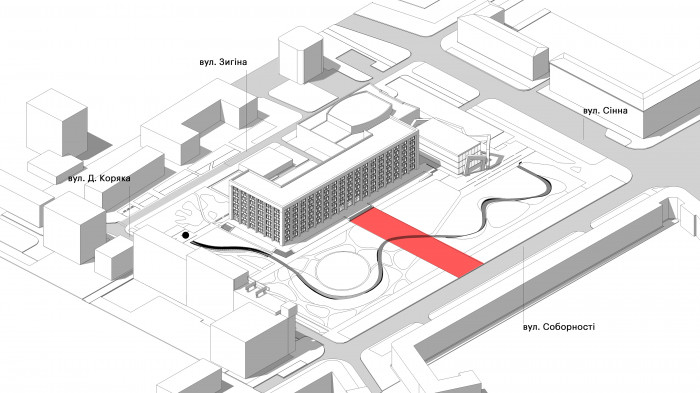
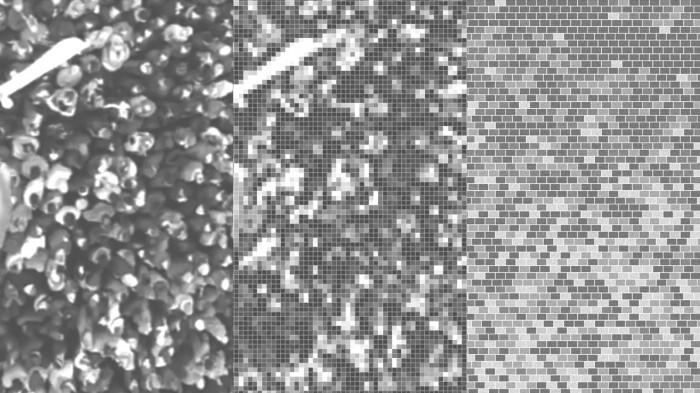
The paving pattern of the square uses four shades of gray stone. The random mix of pavers evokes a crowd gathered on the square and creates a sense of presence — a symbol of Poltava residents’ readiness to stand up for their rights.
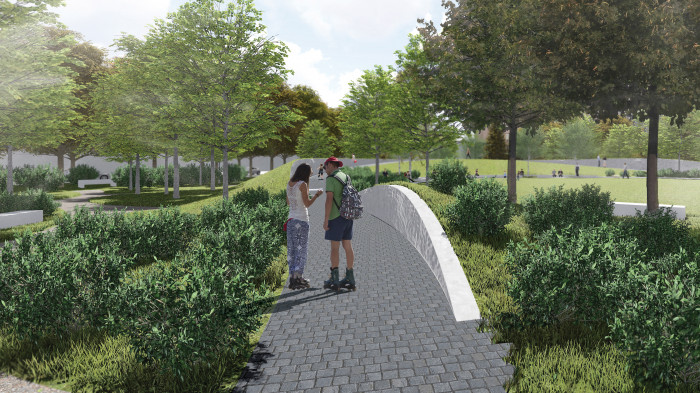
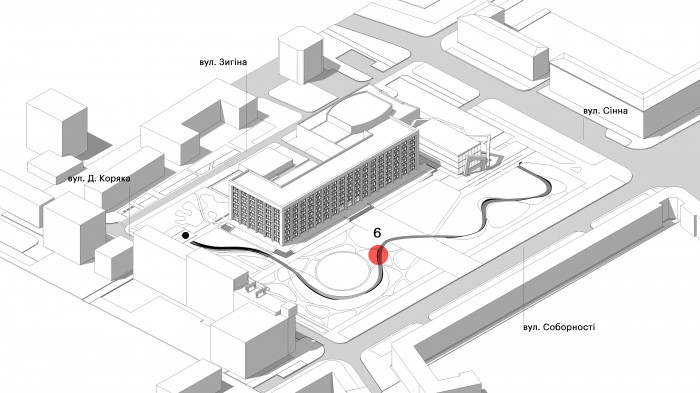
The dictatorship laws are passed. A point of no return for Ukrainian society: all protests are outlawed. The Maidan goes on the offensive, and its demands take clear shape.
The active phase of street confrontation. Berkut uses weapons; protesters burn tires. Tear gas, stun grenades and even water cannons are used against the protesters, although the temperature that day is −8 °C.
On January 21, Yurii Verbytskyi is abducted and tortured to death. On January 22, during the dispersal of the rally on Hrushevskoho Street, security forces kill Serhii Nigoyan and Mykhailo Zhyznevskyi with shots to the head and heart, and publicly humiliate Mykhailo Havryliuk.
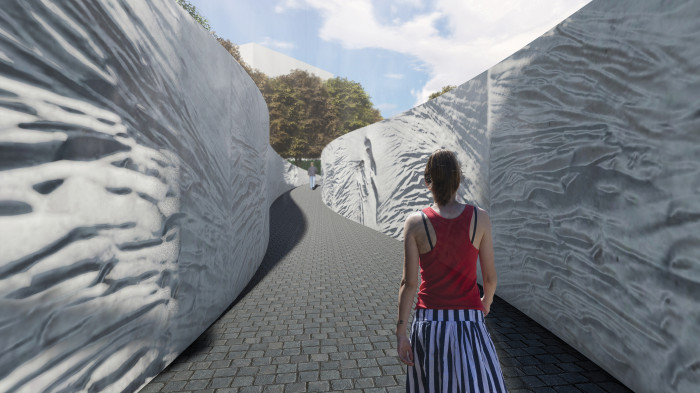
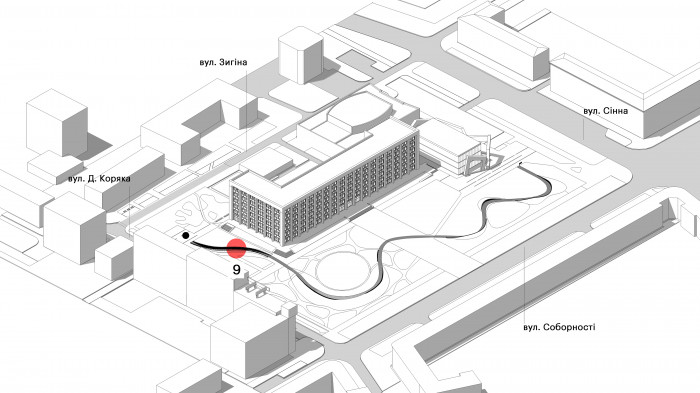
The authorities declare an “anti-terrorist operation” in the city center; the death toll rises to 26, including 10 police officers. On February 20, security forces are issued firearms and live ammunition. Several groups of snipers open fire on the demonstrators.
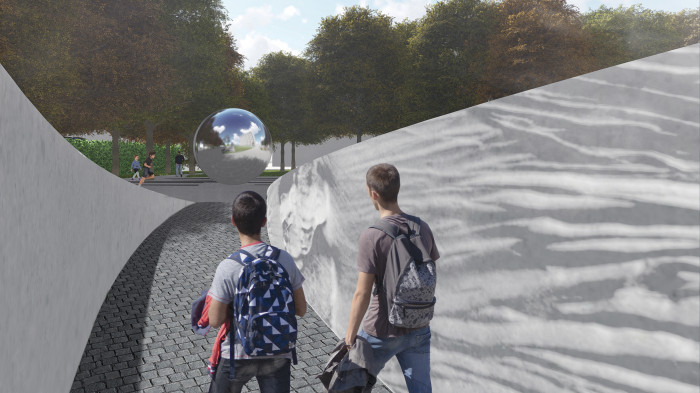
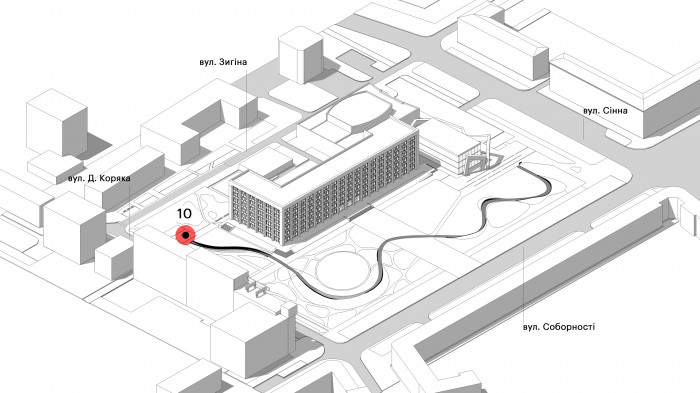
On February 21, opposition leaders, mediated by EU politicians, negotiate with Yanukovych. The resulting agreement provides for early presidential and parliamentary elections and a return to the 2004 Constitution.
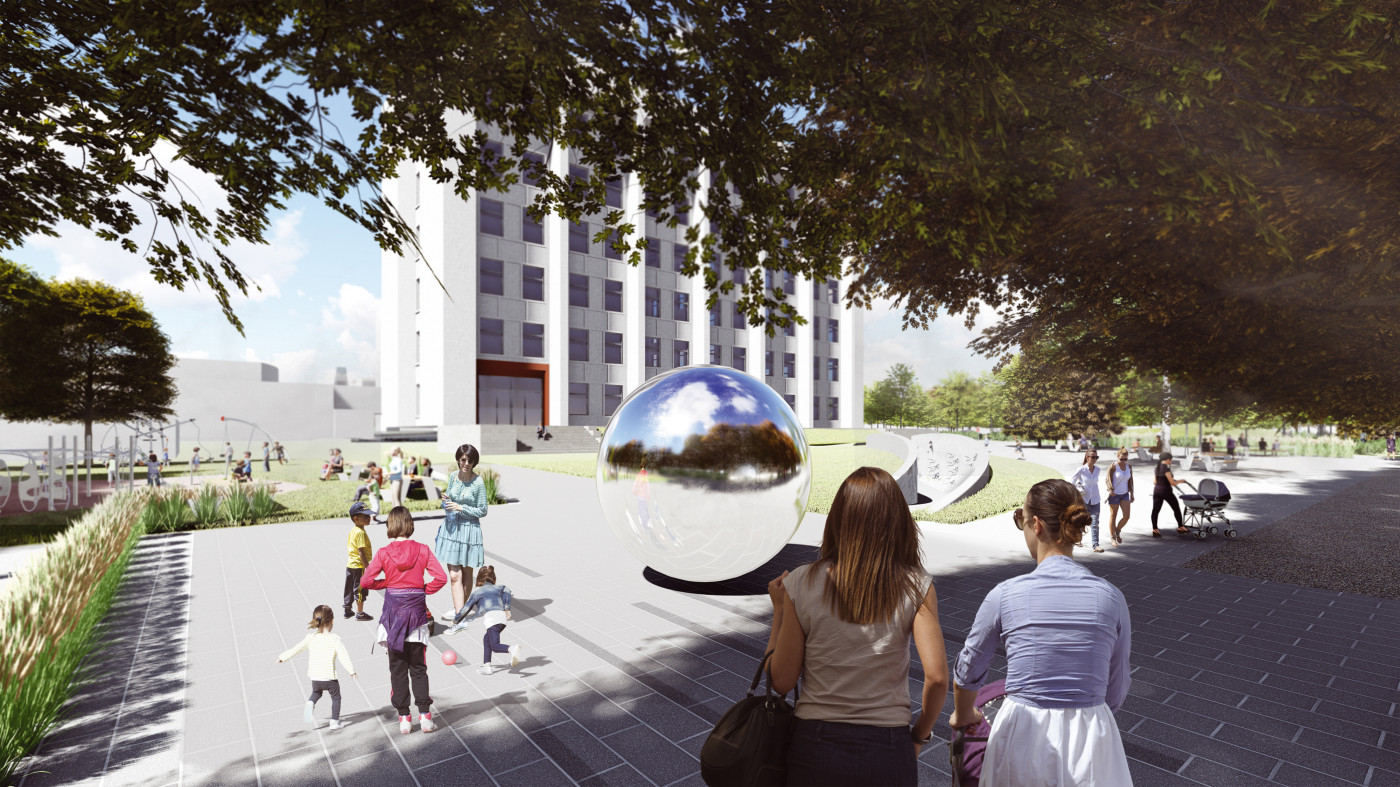
The landscape of the Maidan Territory follows the emotional arc of the events. The point marking the Baptism by Fire stands on a hill next to the amphitheater; moving toward the shooting of the Heavenly Hundred, the path descends into a hollow, heightening the sense of oppression.
The first thing visitors see as they leave the memorial is their own reflection in a large mirrored sphere. It brings the realization that this story concerns each of us directly: everything the Ukrainian people lived through is our shared history.
And how to live with the awareness of these tragic events and one’s connection to them? The memorial offers an answer: life goes on. The mirrored sphere reflects people resting nearby and children laughing on the playground — the space has been returned to the people. The struggle was not in vain.
KOTSIUBA Landscape Architecture
Maksym Kotsiuba, Mariia Andriienko, Marianna Kryvoruchko, Victoria Kachura, Anna Vasylieva, Inna Dobrovolska
Urban platform 'CityLab'
Dmytro Kozyrenko, Dmytro Verovkin, Maksym Lysogora, Olexandr Nochvyn, Yalyna Sadovnikova
Phytopathologist
Sergiy Rohovskyi
Strategy + design — Other Land
Web development — Perevorot.com